
|
Getting your Trinity Audio player ready...
|
Protesters to Call for Justice at the Nasdaq
In a brazenly out-of-touch move, Sigma Lithium rung the closing Nasdaq bell yesterday during NY Climate week in “recognition of their environmental and social leadership in critical minerals industrialization and mining.” The ceremonial bell-ringing took place as Indigenous and Afro-Descendant communities say the company is turning their lands into a sacrifice zone for the energy transition. The mine has had licenses suspended in the last year due to concerns about safety, pollution, and rights violations.
This week diplomats, United Nations staff, NGOs, and climate-impacted communities descend on New York City with the goal of connecting ideas, decisions and partnerships to address the climate crisis and look for solutions.
Mining companies, whose operations contribute 11% to global greenhouse gas emissions and pollute the air, water and soil, are vying to position themselves as part of the solution.
The contrast between Sigma Lithium’s self-congratulatory NYC Climate Week press release and the voices of Indigenous and traditional community leaders bring to light urgent questions about whose leadership leads to lasting solutions as we face the urgent crisis of climate change.
Activists plan to protest at the Nasdaq building on Friday afternoon to demand that climate justice start with Indigenous Peoples’ rights and human rights.
Communities Speak Out Against Sigma’s Impacts
Sigma Lithium has operated a lithium mine, called the Grota do Cirilo, in the Jequitinhonha Valley in the state of Minas Gerais, Brazil since 2023.
Indigenous and Afro-Descendent communities have felt the impacts of the mining operations. The Indigenous people impacted by the mine include the Aranã, Pankararu, and Pataxó People. The Jequitinhonha Valley also has one of the largest densities of Afro-descendent communities in Brazil, according to the Brazilian government.
There is strong opposition to the mine from Indigenous and Afro-descendant communities who have not given their Free, Prior and Informed Consent (FPIC) for the project, despite Brazilian regulation requiring FPIC for both groups of people. Local communities say “that the promise of clean energy has brought dust, incessant noise, and illness.”
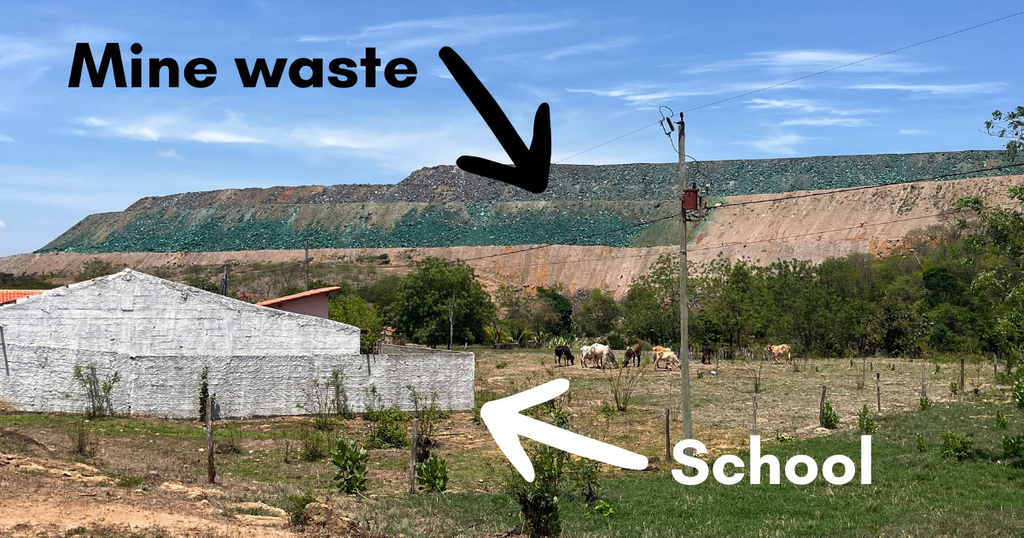
New reporting in Brazil has documented households around the mine where dust blows into their homes from the mine site and its waste piles, and where the blasting from the company damages and cracks to their in houses. These impacts are felt acutely in neighboring communities, which are extremely close to the mine. In one case, the mine waste looms over the local school.
Sigma’s Greenwashing Doesn’t Add Up
SIGMA has made many claims about the sustainability of the company’s practices and tries to position itself as a “green” solution to climate change. They say their operations have “Zero tailing dams” and use a “Zero Tailings strategy,” This is not true.
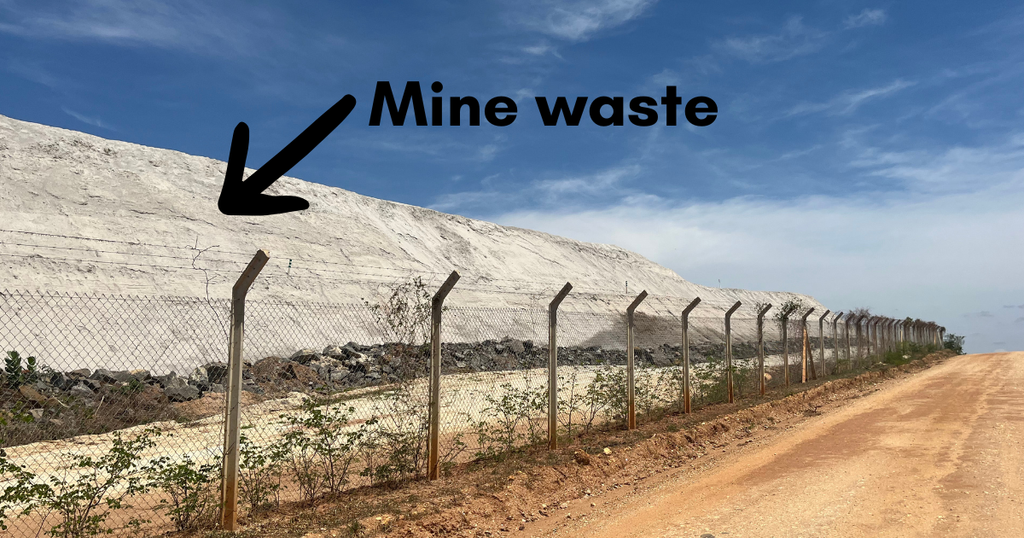
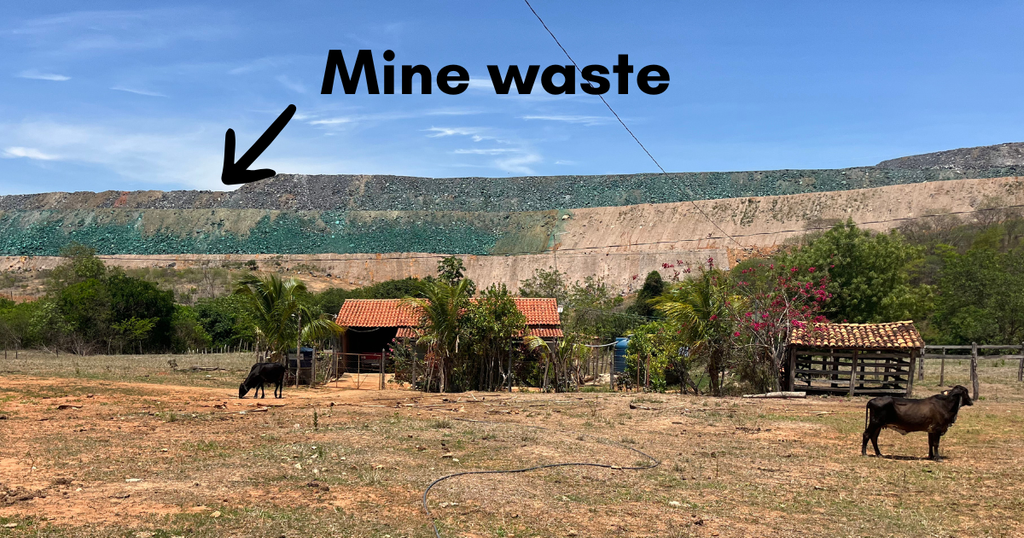
Tailings are the mine’s waste that is left over after processing for lithium. Earthworks has documented their tailings storage facilities in person on multiple occasions. The company continues to pile mine waste next to communities and rivers, even though it claims that waste will eventually be sent off site. Communities are still left with the impacts.
Beyond that, no company in the world mines without producing waste. A report released by Earthworks this year categorically states that there are no known operations anywhere in the world that have eliminated tailings.
Mounting Legal Challenges
On multiple occasions, the Brazilian authorities have brought charges against the company that have resulted in fines or the suspension of operations.
- In January 2026, Brazil’s Labor Ministry shut down the mine’s tailings and waste piles, citing a “grave and imminent” risk to workers and the local community, according to documents seen by Reuters. A labor inspector reported a “partial rupture” of one of the piles near the school in the small town of Poço Dantas. Sigma allegedly continued to use the waste piles and was fined by the Brazilian government. The company was given permission to resume use of the facilities again in February.
- In May a judge found in favor of a public civil lawsuit brought by the Public Prosecutor’s office in Minas Gerais against SIGMA based on years of investigations and research. The suit alleged surrounding communities faced dust and noise pollution, that communities were extremely close to mining infrastructure and that blasting from mining operations were damaging homes. Sigma was initially ordered to pay almost $10M USD in compensation. However they appealed the judgement and won in a higher court.
- In July, the Fundação Estadual do Meio Ambiente [State Environmental Foundation] (FEAM), Brazil’s environmental regulatory agency, ordered the suspension of operations in two mine pits and revoked three of SIGMA’s environmental licenses. The agency issued 16 citations. A field visit by the agency found that one of the waste rock piles had failed. The FEAM ordered Sigma stop operations. Sigma denied some of FEAM’s findings, but not all, agreed to pay US$540,000 in fines and to sign a corrective action agreement. Operations resumed in August.
- In September, a judge ordered the suspension of Sigma’s environmental license stating an Afro-Descendant community in the area of impact of the mine was not considered in the permitting and did not give its Free, Prior and Informed consent for the project. SIGMA has not suspended operations and continues its mining activities, stating they haven’t received a court order.
The allegations against Sigma don’t stop at the courts. In October of 2025, the Observatorio de Mineracao published an exclusive exposé where Sigma co-founder Calvyn Gardner, the ex-husband of the current CEO Ana Cabral, said employees of the mining company approached him and reported “urgent concerns” about the safety of operations in Minas Gerais. He claimed the company was not following its mining plan and highlighted risks associated with the possible collapse of pit walls.
An Urgent Need for Climate Justice
Real climate leaders stand up for Indigenous Peoples’ rights, human rights and workers’ rights. They safeguard the environment and ensure a healthy future for local communities. This cannot happen with dirty mining. Sigma Lithium is an example of how a corporation can use the language of sustainability to attempt to hide the damage it does. Indigenous and traditional leaders who are speaking up to defend their communities from harm are examples for everyone in the climate movement.
On Friday, protesters will call on Sigma to clean up its act, respect the rights of Indigenous peoples and traditional communities, and stop greenwashing their operations.