
Heavy Rainfall and Dam Failures Top of Mind for Vale’s Investors and Impacted Communities
Communities impacted by mining in the Brazilian state of Minas Gerais and their allies in civil society raising the alarm about the risks posed by climate change to Brazilian mining giant Vale’s operations. Climate change is leading to more frequent heavy rainfall in Brazil. That rainfall is putting additional stress on the storage facilities that Vale uses to manage toxic mine waste. The concerns have also risen to the level of the company’s investors.
Mining creates huge amounts of toxic waste, or tailings. This waste remains toxic forever, so storing it safely is an important part of any mining operation. Tailings storage facilities must be able to withstand changing climate conditions in order to protect people and the environment, including future generations. When they fail, polluted water or toxic mud can endanger lives, drinking water, and ecosystems downstream.
Courts suspend Vale’s mining license due to climate concerns
Based on climate change concerns, in December of 2025, a federal court ordered the suspension of the environmental license for an expansion of the Germano complex at the Samarco mine, a joint venture between Vale and BHP, in the municipality of Mariana.
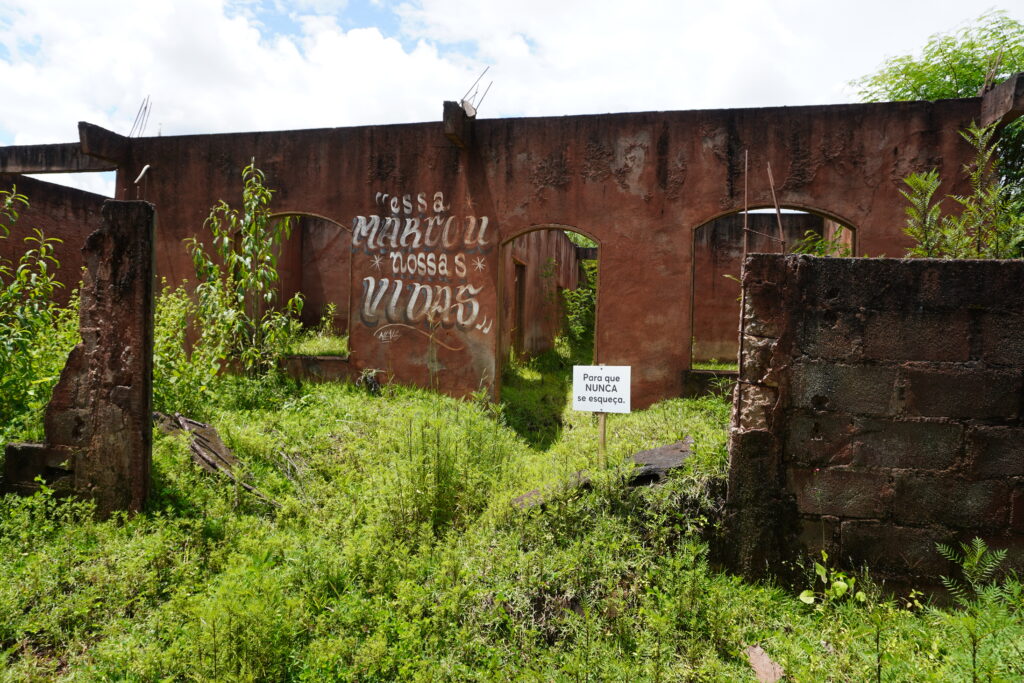
Mariana was the site of the tailings dam failure that is considered to be the worst ecological disaster the country has ever seen. On November 3, 2015, a 40 million cubic meter avalanche of mine waste killed 19 people and contaminated 668 km of rivers and watersheds before finally reaching the Atlantic Ocean. The waste spread across 39 municipalities, displaced 500 families and ultimately affected 3 million people living in the contaminated watersheds.
Vale and BHP have proposed expanding mining operations at the site, which would include new tailings dams. A class action lawsuit filed by residents of the community of Bento Rodrigues, one of the towns destroyed in the 2015 failure, alleged the mining company did not adequately consider the likelihood that future rainfall will exceed historical levels due to climate change. The Instituto Cordilheira, a Brazilian organization working with communities impacted by mining, claims this is the first time that a legal decision has suspended mining activity in the state of Minas Gerais on the basis of the lack of information about climate change.
Two Vale mine facilities overflow
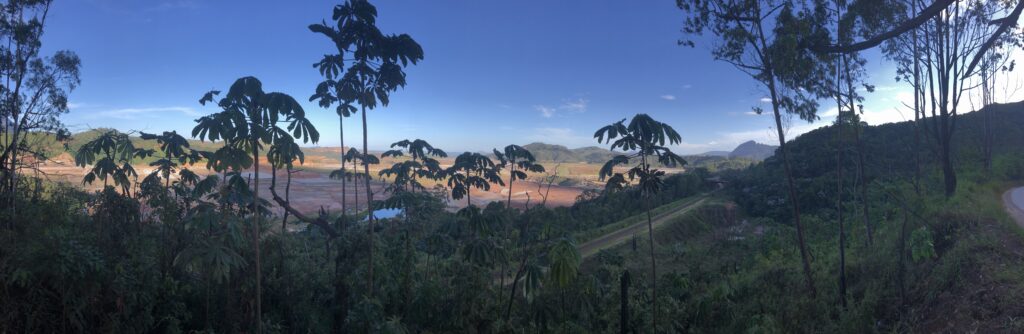
Concerns around the impacts of climate change on Vale’s operations escalated in January of 2026 when two mining structures overflowed and flooded at Vale’s Mina de Fábrica and Mina de Viga in the municipalities of Congonhas and Ouro Preto. This flooding started exactly seven years to the day after the catastrophic tailings dam failure at Vale’s mine in Brumadinho, which killed 272 people. In Congonhas, 262,000 cubic meters of sediment and water flowed into the surrounding area. These overflows flooded another mine downstream owned by CSN, and ran into rivers and streams. The company was fined by the state government of Minas Gerais and the municipal government of Congonhas.
Experts and investors question safety as rainfall increases
Organizations monitoring Vale’s operations are worried that Vale is not prepared for climate events associated with increased rainfall. Daniela Campolina from the research group Grupo de Ensino, Pesquisa e Extensão: Educação, Mineração e Território (EduMiTe), said “It is crucial that Vale S.A. review its tailings dams in light of climate change and strictly adhere to dam classification legislation—a basic requirement for risk management and transparency. The events of January 25, 2026 occurred without extreme rainfall, which indicates inadequate safety measures and heightens the sense of insecurity in the affected areas. Many of the tailings dams in the state are old, built before national environmental and dam safety policies were established. Poor safety standards create risks for long stretches of rivers that are critical for densely populated regions of Minas Gerais and Brazil.” EduMiTe has catalogued the number of tailings dams and their associated risks in the State of Minas Gerais.
Climate change resilience is also a serious concern for Vale’s investors. The Local Authority Pension Fund (LAPFF), a UK based investor group representing local governments whose members’ assets exceed £425bn, has questioned Vale’s preparedness to address the impacts of unpredictable weather patterns resulting from climate change on their mining operations.
According to Cllr. Doug McMurdo, LAPFF Chair, “The January 2026 water overflows at Vale’s Fábrica and Viga sites in Minas Gerais, which authorities said caused environmental damage after reaching the Maranhão River, were deeply concerning. The timing, coinciding with the anniversary of the 2019 Brumadinho disaster, was particularly difficult. Alongside recent legal and regulatory scrutiny of proposed expansion at Samarco’s Germano Complex in the Mariana region, these events raise serious questions about how climate adaptation and physical risk are being governed and managed across Vale’s operations. As long‑term investors, LAPFF expects Vale to clearly demonstrate how it is strengthening the climate resilience of its assets and infrastructure, embedding weather and water‑related risks into project approvals and expansion decisions, and ensuring these risks, and importantly their implications for communities, the environment, and human rights, are subject to robust, transparent, and accountable Board‑level oversight.”
Vale’s mines create ongoing risk and contribute to climate change
A report published by Earthworks in 2025 highlighted ongoing risks to the environment, communities and workers associated with Vale’s operations in Minas Gerais. It also pointed out that Vale’s operations contribute to worsening climate change. Vale S.A. is on the list of the 20 largest greenhouse gas emitting companies in the world, according to the MSCI Sustainability Institute Net-Zero Tracker — the only Brazilian company on the list.