
By Allison Woolverton, Federal Fossil Fuels Campaign Manager, and Aaron Mintzes, Deputy Policy Director and Senior Policy Counsel.
Last week, a group of key Senators published text of a long-anticipated permitting bill, S. 5653, the Bipartisan American Affordability and Jobs Act (BAAJA). While it includes widely supported improvements to strengthen renewable energy transmission, the bill gives industry a wide-open door to deliver widespread damage to science, waters, lands, wildlife, Tribes, and communities impacted by oil, gas, and mining, all while cutting the public out of the process. The Senate appears likely to begin voting on this bill as soon as November 9.
Does the oil, gas, or mining project receive any environmental review?
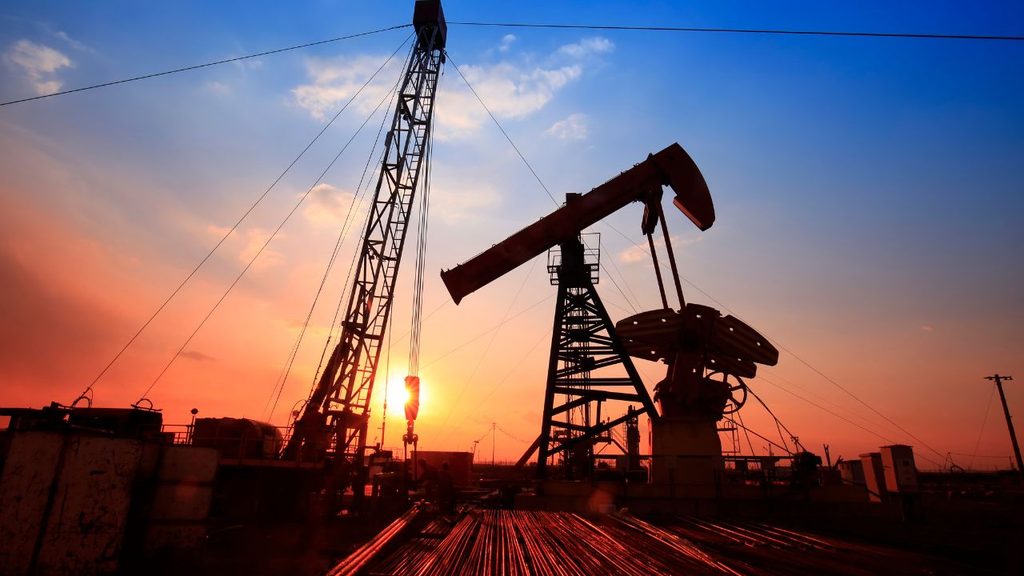
For all major federal projects – such as a new mine, a gas pipeline, or an expansion to an oil refinery – the bill makes sweeping changes to the National Environmental Policy Act (NEPA), the key tool informing the public and allowing input on our own Government’s environmental decisions. In fact, BAAJA provides multiple ways for mining and fossil fuel projects to avoid NEPA review altogether. For example, the bill declares interstate natural gas pipelines are not major federal actions and do not qualify for NEPA review. Nor will most grants, loans, loan guarantees, and other forms of Government financial assistance to corporations seeking permits to build. This is especially troubling given this Administration’s tendency to spend taxpayer dollars on mineral projects to enrich their own family members. The bill also makes it easier for the Government to exclude certain kinds of projects from review, as when the Forest Service unlawfully allowed graphite mine exploration in the sacred Black Hills of South Dakota.
The bill provides the corporations great advantages while being incredibly disadvantageous to the public. If there is a NEPA review, BAAJA defines the “purpose and need” of the oil, gas, or mining project to narrowly meet the company’s own goals. This limits the review largely to what the company chooses. Further, the bill precludes considering alternatives that do meet the project sponsor’s own goals. Traditionally, NEPA reviews consider a range of alternative plans, including not approving the project.
And even if the oil, gas, or mining project gets reviewed, what process does it get?
Before applying for a permit, project sponsors selectively meet with interested parties such as Tribes, local governments, and community organizations to create a “record of stakeholder engagement.” The project sponsor’s prepared record includes “any ways the feedback from stakeholders were incorporated into the proposed agency action.” Project sponsors may draft NEPA documents, but the agency decides the level of review. Traditionally, large oil, gas, and mining projects might receive two or three opportunities for comment. First, to understand the project’s scope. Then, to comment on the Government’s draft study. And for those projects that the agency decides may have significant environmental impacts, another public comment opportunity.
Yet, BAAJA requires only one public comment period at the beginning of permitting and only for the most harmful projects. The bill requires no public comment for any draft studies, nor for any projects with more moderate impacts. When the Government does prepare a review, it may disregard any study available afterward, effectively preventing the public and Tribes from contributing science and Indigenous Knowledge tailored to that project’s review. BAAJA also closes the courthouse door by limiting legal challenges to only those who comment, and limits their legal claims to those raised in their comments.
Finally, if BAAJA becomes law, it would lock in all oil, gas, and mining projects already approved under this Administration’s feckless, weak, and submissive minerals policy. Worse, the bill precludes any future President from anything that may “alter” or “amend” what this President has already authorized, including transferring sacred landscapes like Oak Flat to foreign mining corporations. BAAJA proponents argue this provision starts wind and solar projects this President has unlawfully halted. Even so, it also leaves in place projects this President already unlawfully started, like Alaska’s Ambler Road through the Gates of the Arctic National Park.
Unfettered Mining of Public Lands
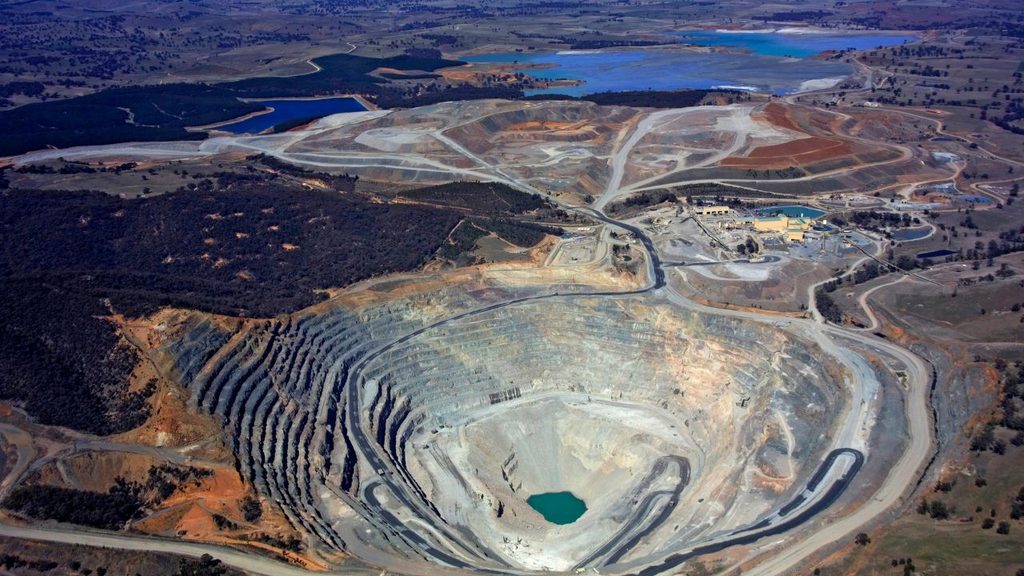
In addition to gutting protections for wildlife and people, BAAJA would open public lands to unchecked mining. That will cause permanent damage.
The United States’ mining law is already wildly inadequate. The 1872 Mining Law was written more than 150 years ago. Its goal was to encourage mining in the West, not to protect communities or the environment. It can seem hard to imagine how this law could be worse, but BAAJA is up to the challenge.
The damage extends beyond the mine itself to include infrastructure and dumps for toxic mining waste. BAAJA allows mining companies to claim nearly unlimited public lands for any use associated with a mine plan, including dumping waste, roads, pipelines, or power lines. It expands a legal right for mining companies to claim public lands under the 1872 Mining Law, rather than allowing the Government to choose the number and locations of waste dumps, roads, or transmission lines.
There is good news in this bill. Currently, the hardrock abandoned mine lands fund (created in 2021’s Infrastructure Law) has no dedicated revenue, and so relies on taxpayers instead – roughly $4.8 million/yr. BAAJA would dedicate meaningful funding sources toward this cleanup with revenue from mining “acquired lands” – lands the Government bought from states, towns, or private entities, mostly in the Midwest and East– and raising certain fees.
Case study: Desert Southwest Pipeline
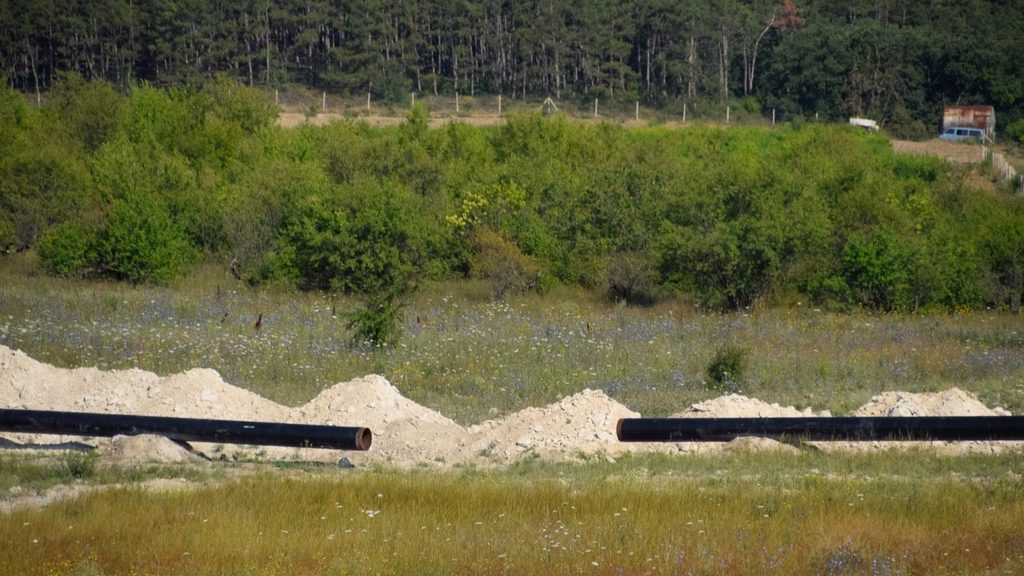
BAAJA’s devastation of environmental review can be seen in its potential impact on the proposed Desert Southwest Pipeline. The 48-inch pipeline proposed by Energy Transfer would run 522 miles carrying 2.3 billion cubic feet of fracked gas per day from the West Texas Permian Basin through southern New Mexico and Arizona. The pipeline will supply gas to large AI data centers via other pipelines as well as municipal utility grids facing increasing demand due to data center buildout.
Land, water, Tribes, and communities along the pipeline’s route are threatened with pollution, safety risks, and harm to sacred sites and fragile ecosystems. The pipeline would run under the Rio Grande, Pecos, San Pedro, and Gila Rivers via horizontal directional drilling, a risky process using pressurized mud to tunnel under rivers. It would pass through the ecologically diverse Chihuahuan and Sonoran Deserts and the Otero Mesa, America’s wildest grassland that hosts over 1,000 native species and thousands of archaeological sites.
Yet, BAAJA would say all interstate natural gas pipelines, like Desert Southwest, are not major projects, and therefore do not receive NEPA review. The change would entirely alter the multi-step environmental review under the Federal Energy Regulatory Commission and crucial opportunities for public input by communities along its intended route.
Additionally, BAAJA amends the National Historic Preservation Act to essentially make Tribal consultation discretionary. Now, Tribes and states can review water crossings and impose their own water quality standards under Sec. 401 of the Clean Water Act, BAAJA weakens that authority. The bill imposes burdens upon states and Tribes and undermines tribal and state sovereignty over a massive pipeline project cutting through their land. And Desert Southwest is just one pipeline of the hundreds of miles of pipelines the Trump Administration is poised to bring online in coming years.
Conclusion
There’s still time to tell Congress that BAAJA creates more harm than good. The bill weakens NEPA, the 1872 Mining Law, the Clean Water Act, and Tribal consultation under the National Historic Preservation Act. Overall, the bill needlessly serves extraction over the people and renewable energy. Congress should pass the bill’s renewable energy transmission provisions, strike the harmful ones, and instead preserve science, public input, consultation, and meaningful mining reforms.