
|
Getting your Trinity Audio player ready...
|
This summer, Earthworks embarked on a road trip with partners that started in the Permian Basin, which spans from West Texas to Southeastern New Mexico, and ended on the Texas Gulf Coast. Record-breaking production of oil and gas in the Permian Basin has made the U.S. the world’s top oil and gas exporter, causing environmental and health harms in communities all along the supply chain. This is the first blog in a series documenting those harms. Click here to read the first.
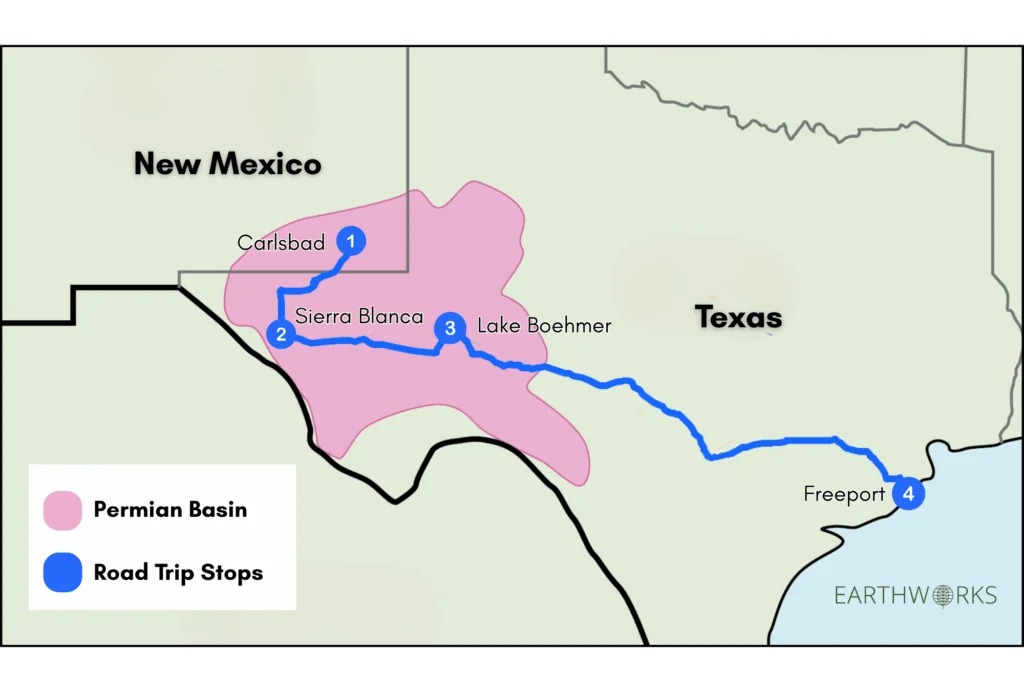
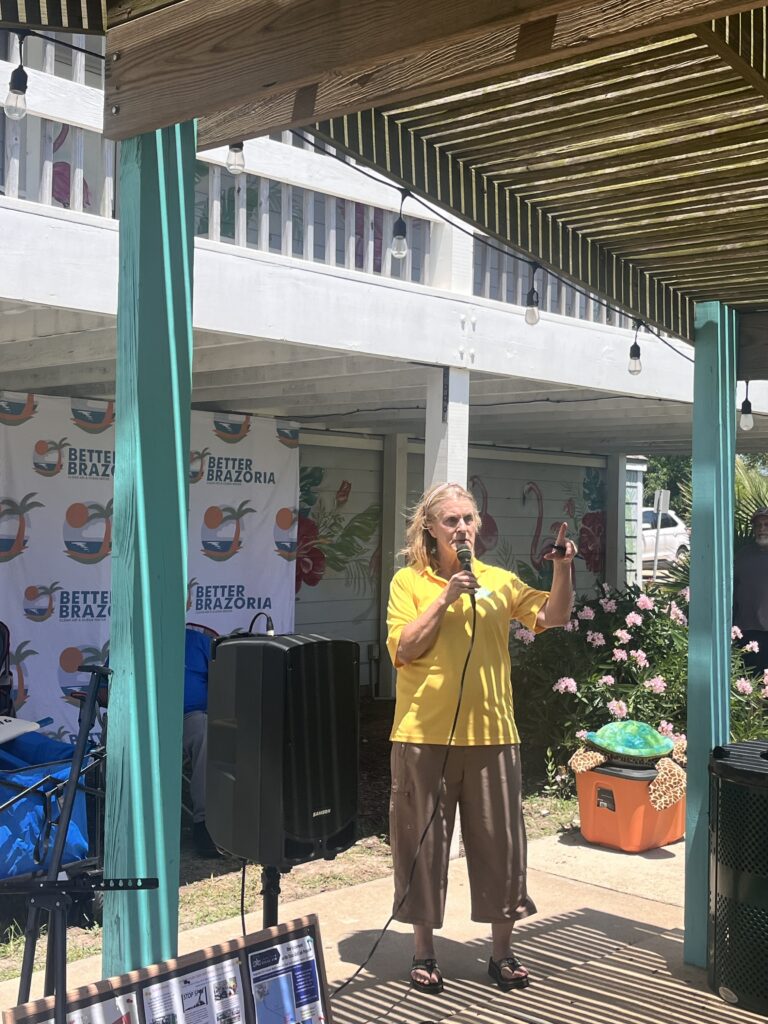
For the last stop of our journey, we joined up with old friends and allies in Freeport, Texas, a coastal town on the Gulf of Mexico, one hour southeast of Houston. Four local grassroots organizations came together to eat home-cooked food and enjoy the sea breeze. But this was no regular picnic.
The beach-side pavilion where the groups gathered rested in the shadow of the massive Freeport LNG facility where liquified “natural” gas (LNG) is loaded onto enormous tanker ships to be combusted overseas. Better Brazoria, Freeport Haven Project, S.A.F.E. Communities, and Climate Conversations Brazoria County gathered with friends and family to commemorate the three year anniversary of Freeport LNG exploding. It was an eruption so powerful it shook homes miles away. It even knocked a lifeguard off her chair in nearby Surfside Beach.
“No alarm was ever sounded to warn the beach that something bad was going on [that day],” said Dr. Gary Whitt, an organizer with Better Brazoria and resident of the nearby town of Surfside.
Despite demanding accountability from the company through letters and meetings, Freeport LNG has refused to sit down with residents and tell them what their new emergency response plan is.
Right now, the Trump administration is working to update 45-year-old safety rules governing LNG pipelines and facilities, which have not kept pace with the massive expansion of LNG export infrastructure. Advocates champion updated rules that result in better protection for communities; yet, Trump’s administration has signaled its intent to weaken the rules, making it easier for oil and gas billionaires to keep building.
LNG is the term the oil and gas industry uses to describe methane gas that is made so cold that it turns into a liquid and is loaded onto ships for export to other nations. The U.S. produces more methane gas than it needs, so companies liquify the gas because it is easier to transport, and sell the extra gas to other countries to make a profit.
Though marketed as “cleaner,” LNG is a highly polluting fossil fuel. Methane pollution from LNG pipelines and plants accelerate the climate crisis—and thus more heatwaves, hurricanes, and wildfire smoke. Shipping LNG overseas also means more drilling, pipelines, and pollution at home. It slows down the switch to clean energy, like wind and solar, both at home and abroad.
The consequences of exporting LNG go far beyond the climate-warming impacts. Increasing U.S. capacity to export LNG has devastated fishing and shrimping communities along the Gulf Coast, as concrete slabs replace critical wetlands, dredging churns up soil, and large waves from LNG tankers passing through channels disrupt fragile habitats. In the 2024 season, shrimpers in Cameron Parish, Louisiana reported up to a 90% decline in catch.
In Surfside, Dr. Gary Witt shared concerns about leaks, spills, and explosions destroying the beach and threatening tourism, the lifeblood of his beach community. “If we get an oil spill, the tourists aren’t coming here, and our community dies.”
LNG export terminals also mean real harms to human health. The direct air pollution from currently operating LNG export terminals causes an estimated $957 million in total health costs, annually.
What’s worse? Oftentimes LNG companies do not even pay their fair share of taxes. In fact, the state of Texas has lured LNG companies with tax abatement programs, such as the Chapter 312 Property Tax Abatement Program and Chapter 403 Property Tax Limitation & Replacement Payments. That means communities lose significant tax revenue that could fund public services. A 2024 report from Sierra Club says the 312 tax abatement program allowed Freeport LNG to avoid 100% of property taxes for 10 years, which comes to roughly $149 million. While large, multinational corporations profit, the communities who bear the brunt of these impacts are left with toxic pollution and environmental destruction.

Disasters like the explosion in Freeport are not few and far between. Just a couple of hundred miles up the coast in Calcasieu Parish, Venture Global started construction on another massive LNG export facility, called CP2. The devastation has already begun: in August, fishermen sounded the alarm that dredging to construct the terminal created a massive mud spill, spewing sediment that buried crab traps, oyster beds and wildlife across the marsh.
The harms of LNG exports are not felt only along the Gulf Coast. Across the U.S., increased LNG export raises prices of gas utilities for ratepayers and further ties energy prices to a volatile, international market, since a surge in demand for U.S. LNG would put upward pressure on domestic gas prices.
To stay updated on how to participate in shaping LNG rules, sign up to receive Earthworks emails.
To monitor the ongoing dredging disaster on Facebook and stand with hardworking families, follow: