
|
Getting your Trinity Audio player ready...
|
Deep underground near the Salton Sea, in southern California’s Imperial Valley, lies one of the largest lithium deposits in the world. It has drawn the attention of clean tech entrepreneurs, climate activists, and politicians. A number of companies have already introduced plans to extract lithium from Salton Sea brine, and more are on the way. People are calling it Lithium Valley.
A steady, reliable, ethically sourced supply of lithium is an essential part of a just transition to cleaner energy. We need it for electric car batteries and energy storage. But it is also used for military and consumer technology, which can increase the pressure to extract more.
The history of natural resource extraction tells us to proceed with caution. Too often companies have come into a community, extracted the natural wealth, and left a mess behind for locals to deal with. Lithium extraction cannot come at the expense of clean air, safe water, or tribal sovereignty.
We can get it right—we have to.
Controlled Thermal Resources’ Hell’s Kitchen direct lithium extraction project is among the furthest along and will set the precedent for those that follow. That’s why we’ve been tracking it so closely and examining its potential impacts so carefully. The new facility would include a geothermal power plant to create electricity from the brine. Then, a separate process will remove the lithium before the brine is injected back into the ground. This novel approach raises questions about how it will impact air and water. It deserves careful scrutiny.
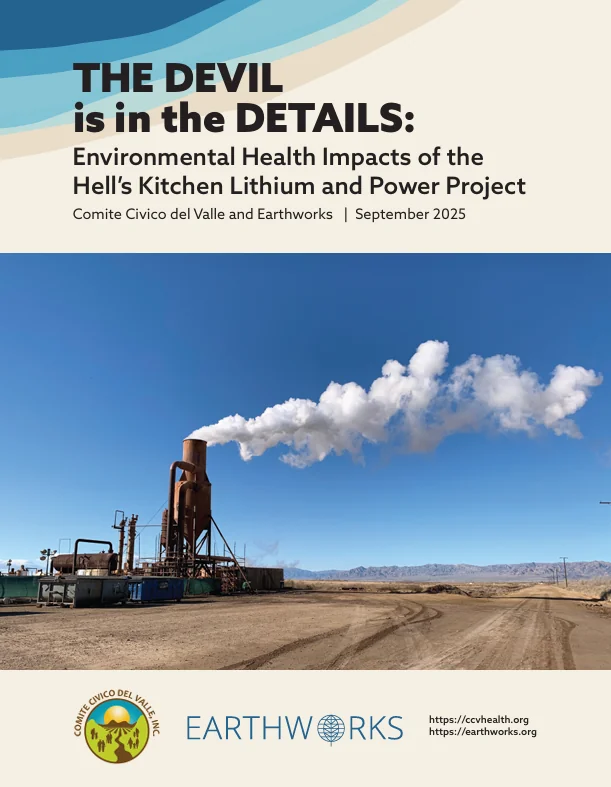
A new report, published by Comité Cívico del Valle and Earthworks, highlights our key environmental and public health concerns. The project would use a lot of water. This is likely to make the shoreline recede more and contribute to the already serious problem of dust pollution in Imperial County (where rates of asthma and other respiratory illnesses are far above average). It would also produce hazardous waste that contains arsenic and lead. Many California Indian Tribes have raised concerns about how the project will impact tribal cultural resources. They point out that CTR has so far failed to engage in meaningful tribal consultation and tribal-specific mitigation measures.
Setting the Standard for a Greener Lithium Valley
The Hell’s Kitchen project should set the standard: rooftop solar, electric vehicle fleets, and onsite water recycling would minimize the project’s impact. And we need to be confident that its waste is safely disposed of (in other words, that it doesn’t end up in landfills, where it could leach into groundwater).
Imperial County approved the project last year. But we believe its environmental review did not meet California’s legal standards. That’s why we joined Comite Civico del Valle in challenging the project’s approval in court.
A Better Path Forward
A simple agreement would pave the way for Hell’s Kitchen to move forward: the creation of an environmental impact program funded by a fee tied to the project’s annual water use. The program would pay for environmental improvement projects in impacted communities near the Salton Sea (for example, improving water access and water conservation, controlling dust). An independent community advisory committee, with public accountability, would oversee the program and control the funding.
We are appealing a judge’s decision to uphold the project’s approval (we filed our opening briefs in that appeal on September 11). We have been and remain open to settlement talks to implement reasonable environmental mitigation measures.
Let’s get this right. Let’s put Lithium Valley on the path to sustainable development that benefits everyone and creates economic opportunity without sacrificing clean air, safe water, and respect for sacred cultural sites.