
|
Getting your Trinity Audio player ready...
|
A recent failure at a mine waste facility in Mexico highlights how dangerous mine waste, or tailings, can be for workers and the importance of protecting workers’ rights and safety at mines around the globe.
Mining creates huge amounts of toxic waste that remains permanently in the environment. Storing that waste safely is important for nearby communities and the environment — and for the workers who work in and around tailings facilities. The consequences of failure can be deadly, burying people in toxic mud and polluting land and water.
Workers trapped in tunnels in Mexico
On March 25th, a tailings failure at the Santa Fe mine in Sinaloa, Mexico flooded the mine’s underground shafts, trapping workers in the depths of the mine. A crew of 25 workers were in the shafts at the time of the failure, and twenty-one were rescued quickly.
Of the four trapped miners, one was rescued after 100 hours underground. A second worker was found alive after 13 days of rescue efforts. Sadly, a third worker’s body was found as rescue crews entered the second week of excavation, and despite continued efforts, the fourth worker’s body has not been recovered.
The silver-gold mine is owned by a Mexican mining company called Industrial Minera Sinaloa S.A. de C.V. (IMSSA). According to Mexican media reports, the flooding appears to have been caused by a failure in the liner of a tailings dam, which created a sinkhole and seemed to have allowed “muddy material to seep into the mine, generating an internal erosion process that weakened the structure of the tunnels and blocked the main access ramps.”
Tragically, workers often pay the price for dangerous tailings dams.
Hundreds killed at lunch hour in Brazil
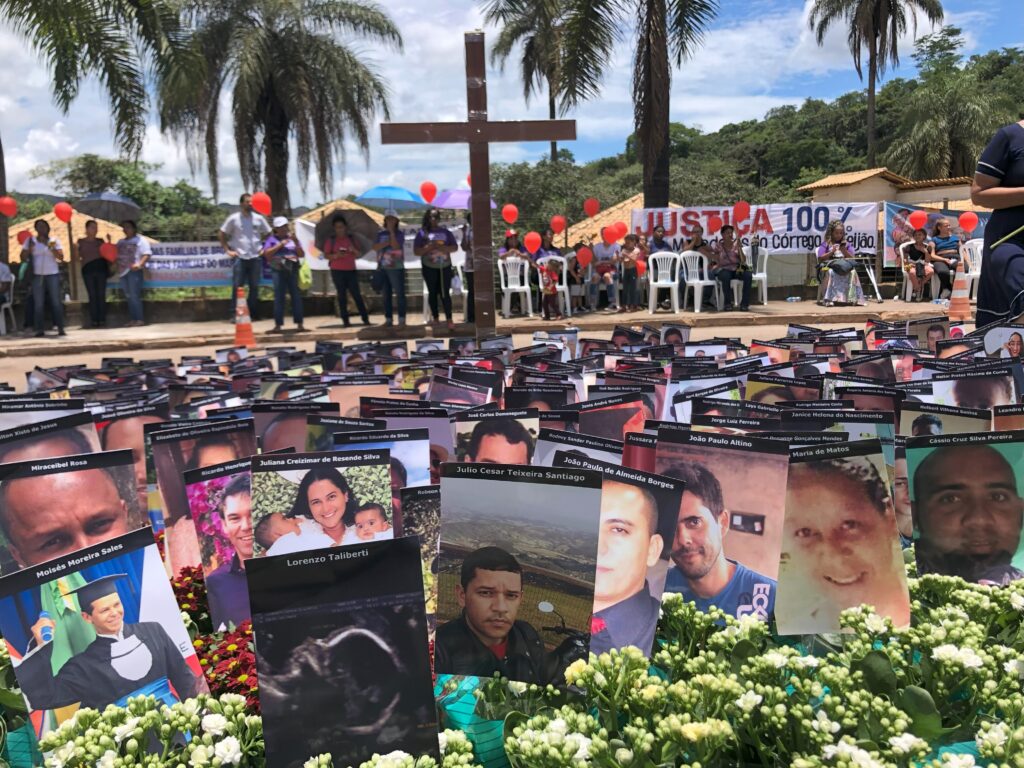
Of the 272 people killed when the Brumadinho tailings dam failed in Brazil in 2019, 250 were workers. The failure holds the place of the worst industrial accident in the history of the country. The mining company, Vale, built a cafeteria below the tailings dam, and the dam failed over the lunch hour, placing workers directly in the path of the tailings landslide. A 2023 study found that body dismemberment was 3.4 times greater among mine workers than among community victims, and stated that, “the higher number of fatalities and greater dismemberment among employees than with community residents underlines the occupational dangers in the mining industry and clarifies the dynamics of the disaster.”
Multiple accidents cost lives in Indonesia
A series of industrial accidents tied to Indonesia’s booming nickel mining and processing industry underscore the risks to workers when mining expands without the necessary considerations for safety. From 2015 to 2024, annual mine production of nickel in Indonesia rose from 5.7% to 62.2% of world mine production. This mining creates a huge amount of waste. However, this expansion has been tainted by tragedies.
At the Indonesia Morowali Industrial Park, mismanagement of tailings facilities has led to numerous worker deaths. “The tailings dump threatens the health and safety of workers. The dams have the potential to collapse, which can result in fatalities and workers being buried in mud and exposed to toxic chemicals,” said Tesar Anggrian, a campaigner for the union representing mineworkers at the industrial park, FSPIM-KPBI.
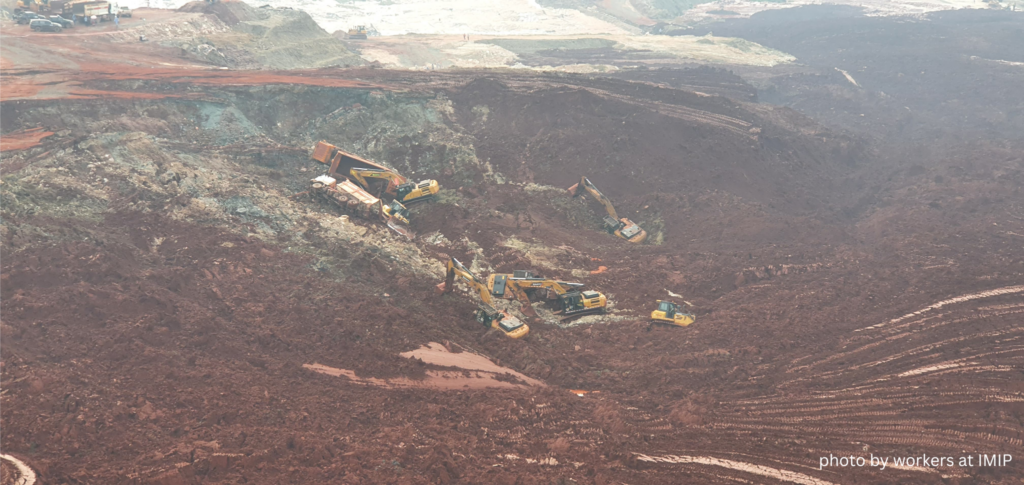
In January 2025, two workers were buried alive by a landslide caused by mining activities; then in March of the same year a tailings failure killed three more workers. In February of 2026, yet another failure killed a worker when waste buried the heavy machinery he was operating.
A 2026 Earthworks report, Filtered Tailings: The Catastrophic Failure of a Disruptive Technology, highlights the specific dangers associated with a certain type of waste storage technology being used at many newer nickel facilities in Indonesia. The massive size and rapid expansion of these tailings facilities is leading to increased risk. Indonesia’s heavy rains and earthquakes could also make failures more likely.
Whistleblower protections make everyone safer
Workers often know when tailings facilities are unsafe. In an interview from his hospital bed, the first rescued Mexican miner said, “I’d been thinking for quite some time that the tailings dam was right above the mine, and I knew it was bound to burst at any moment.” Mineworkers in South Africa warned management of dangerous conditions at a tailings dam in Jagersfontein. Their concerns were ignored, and the dam later collapsed and killed five people.
Workers safety standards exist and must be followed
Workers’ lives must never be expendable in the push for minerals and metals. Mining companies should not be allowed to prioritize their profits at the expense of safety. Local and national governments together with mining companies often expend vast resources and time to rescue workers when a failure occurs, but it is equally, if not more, important that they invest the same resources and time on keeping workers safe in the first place.
Mining companies need to listen to and engage with workers, take all the necessary measures to protect their lives, and create mechanisms for workers to sound the alarm on dangerous conditions, without fear of losing their jobs. Safety First: Guidelines for Responsible Mine Tailings Management, lays out a series of guidelines to protect workers, the environment and communities from the significant risks posed by mine waste. The guidelines have been endorsed by the largest global mineworkers union, IndustriALL Global Union.