
|
Getting your Trinity Audio player ready...
|
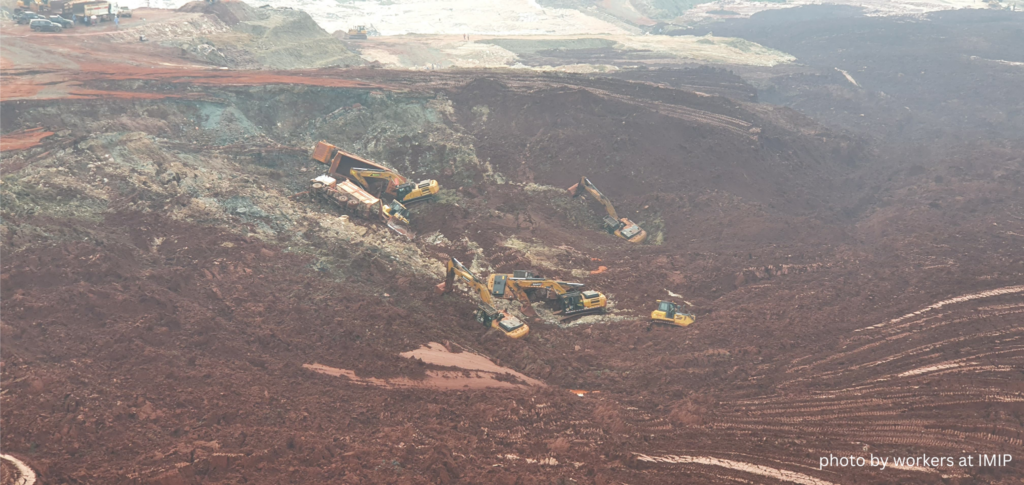
A landslide of toxic mine waste at the Indonesia Morowali Industrial Park (IMIP) on February 18, 2026, has reportedly killed one person and halted operations at the site.
According to a report by CNBC Indonesia, the man who died was a worker from Palopo, South Sulawesi. He did not have time to evacuate. He was buried by the landslide inside the excavator he was operating, where his body was later found. Local news reported that workers continued working in the area before the landslide despite seeing cracks in the soil, raising concerns about workplace safety protocol.
A series of fatal mine waste incidents raises concerns
This was not the first death caused by mine waste at the facility. Last year, a similar incident in the PT QMB tailings disposal area at the same industrial park resulted in three deaths and an injury among workers and also halted production for a time.
The industrial park also experienced heavy flooding in 2025, when a separate tailings storage facility owned by PT Huayue Nickel Cobalt was breached. Families living in a nearby village were affected by the flooding. Satellite imagery suggests that the facility experienced additional breaches before that flooding event. A 2024 survey conducted by the All-Indonesia Workers’ Union identified poor workplace conditions, stemming from negligence, inadequate personal protection equipment, unsafe environmental conditions, and equipment malfunction.
The string of incidents at IMIP demonstrate the risks that Indonesia’s booming nickel industry presents for workers and nearby residents.
Skyrocketing amounts of mine waste create challenges
A rush to provide nickel for electric vehicle batteries sparked a mining industry boom in Indonesia. In the last nine years, Indonesia has gone from 5.7% to 59.5% of world mine nickel production, according to the US Geological Survey. That huge increase has meant a corresponding increase in highly toxic waste, known as tailings, from nickel mining and processing.
Mining creates large amounts of toxic waste that must be managed and stored forever. The expanding nickel industry in Indonesia is using a processing technique called High Pressure Acid Leaching (HPAL) that creates especially high volumes of toxic waste. The most recent landslide occurred in the tailings disposal area at IMIP 9, owned by PT QMB New Energy Materials Co. Ltd, which uses HPAL processing. The PT QMB operation alone reportedly produces 19.2 million tons of mine waste each year.
A disaster-prone area increases risks
Heavy rain and earthquakes make the area already prone to disasters and floods and can dramatically increase the risk of storing large volumes of mine waste. IMIP spokesperson Dedy Kurniawan attributed last year’s deadly landslide to heavy rain.
Kurniawan said that the most recent landslide is suspected to have been triggered by the fragile soil conditions at the lower area of the tailings disposal, which were unable to support the weight of the tailings.
Urgent action needed for worker safety
The Indonesian government must act swiftly to ensure these deadly failures do not continue and to protect the environment, communities, and mineworkers from risks posed by tailings across the country. It should implement a moratorium on all new HPAL nickel facilities and carry out safety audits at all existing filtered tailings storage facilities in Indonesia. Furthermore, operating companies should be instructed to halt deposits to tailings facilities whose safety and structural integrity cannot be verified and guaranteed.