
|
Getting your Trinity Audio player ready...
|
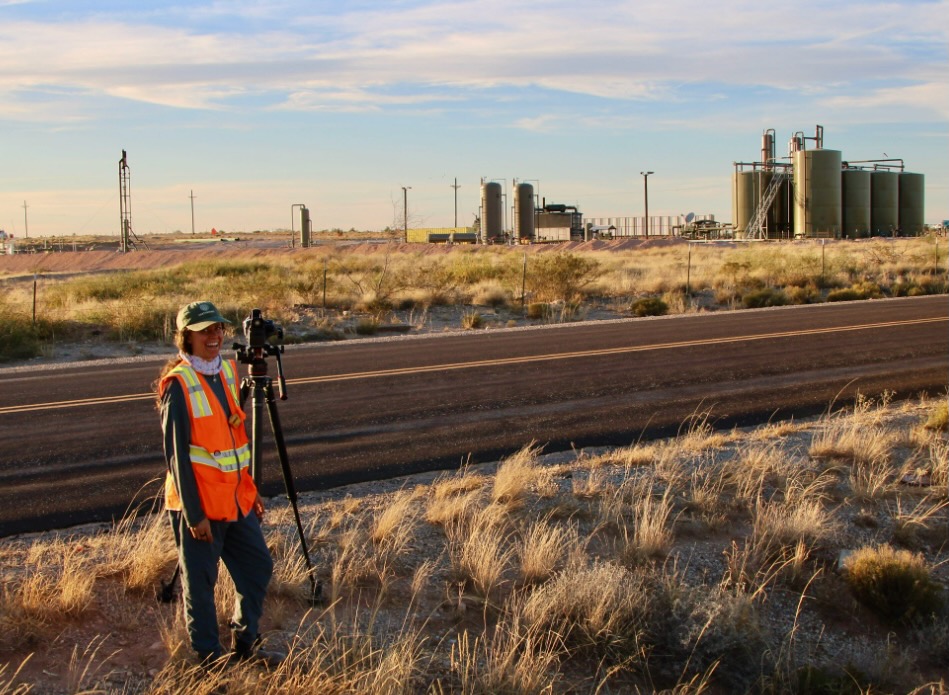
The first time I pointed the optical gas imaging (OGI) camera at a well site in New Mexico, an entire world appeared that is not visible to the naked eye. What looked like empty air suddenly turned into thick plumes of pollutants, like methane and benzene, that harm the climate and health. Becoming trained to use this camera and analyze the data it collects has taught me that one of the most significant and most dangerous parts of oil and gas pollution in New Mexico is the part most people never get to see.
I’m Mandy Sackett, Earthworks’ new New Mexico Lead Campaigner and a certified optical gas imaging thermographer. I have spent more than a decade standing with communities fighting for clean air and water. I’m excited to bring that experience to Earthworks. As a thermographer, I’ll be out in the field documenting emissions from industry activities and turning that evidence into action.
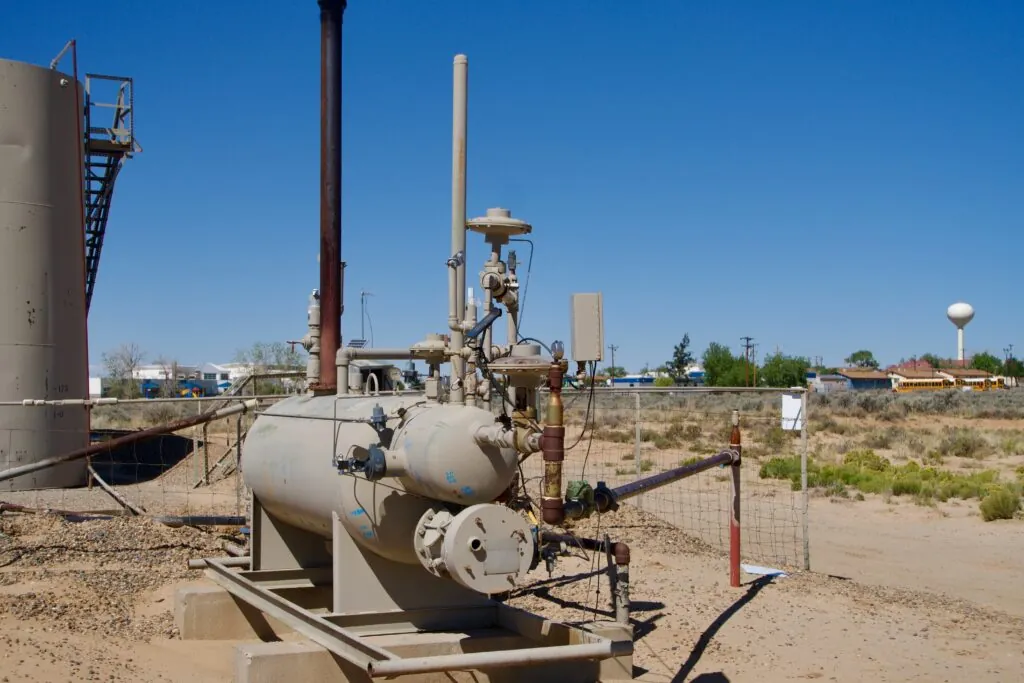
My first field trip took me to the San Juan Basin, in the Four Corners region, where aging wells sit close to homes and schools. From the road, the infrastructure looks tired but contained. Through the camera, it is anything but. Ten of the seventeen sites we visited had visible emissions. Broken thief hatches. Unlit flares. Leaks from equipment that should have been repaired years ago. At one site near Counselor, emissions from three separate sources drifted toward a school less than a thousand feet away. At another site in Kirtland, emissions leaked from a tank battery–equipment that stores and processes drilling fluids–that has barely produced anything since 2019. It sits just a few hundred feet from a neighborhood.
What I learned in the San Juan Basin is simple: when wells decline, they do not stop polluting. They only become less profitable, and the gap between what they earn for operators and the pollution they leak grows wider.
A few weeks later, I testified at the state’s Oil Conservation Commission (OCC) hearing. The OCC sets statewide rules for oil and gas operations to prevent waste and protect people and the environment. They were considering increasing bond requirements – the funds companies set aside for end-of-life well plugging and remediation. If companies do not set aside enough money to plug wells and clean up sites, taxpayers inherit a growing landscape of aging, leaking infrastructure. The Commission’s final decision later this winter will shape how New Mexico handles thousands of declining wells for years to come.
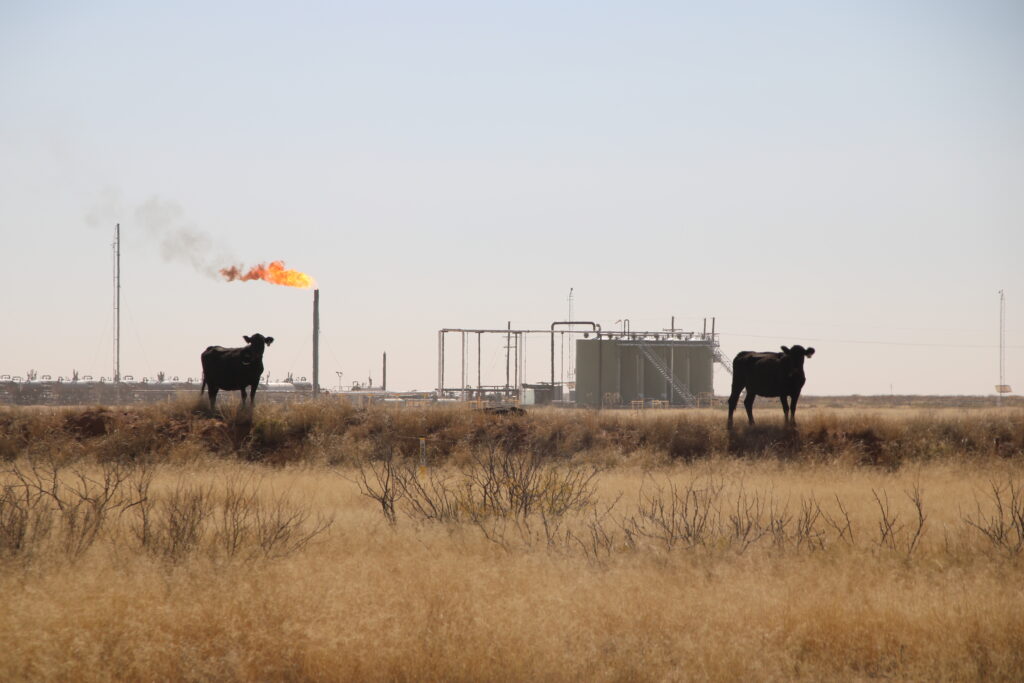
My next field trip brought me to the Permian Basin, one of the most productive oil and gas regions in the world. In Southern New Mexico, the pollution was so heavy you could feel it in the air and your lungs before even lifting the camera.
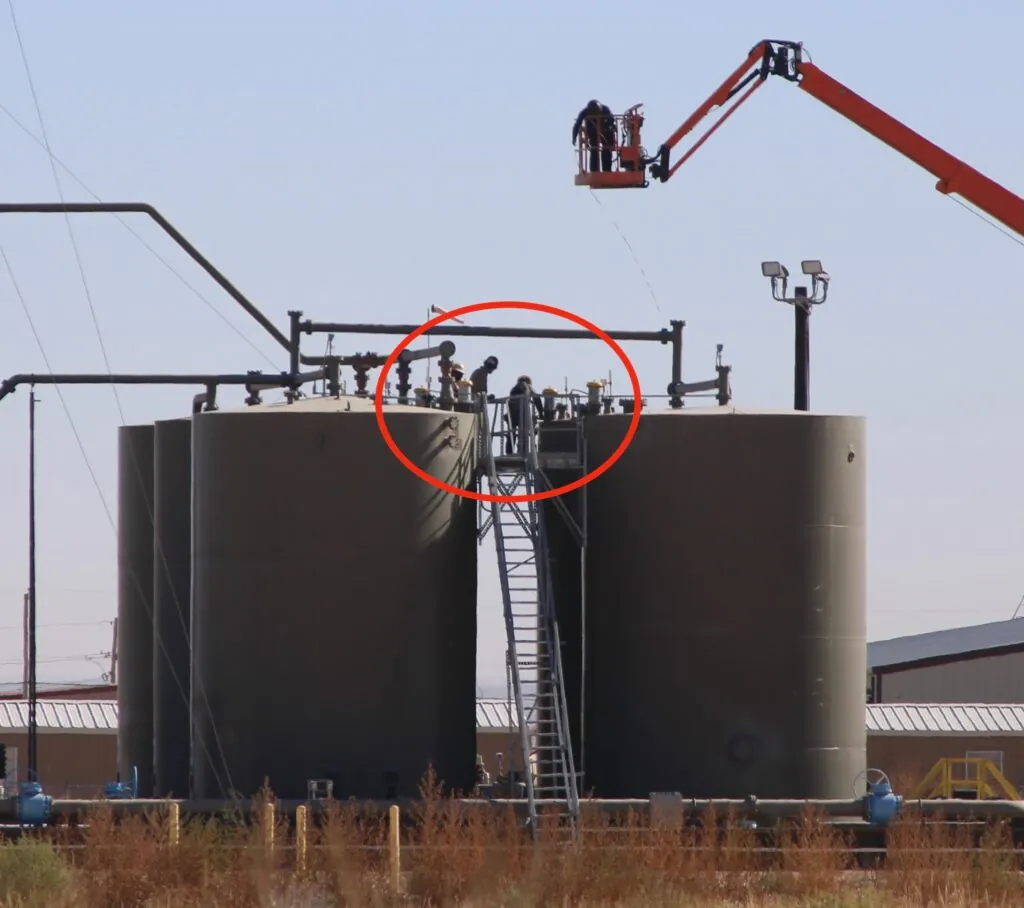
We found some significant issues after visiting over 40 sites and finding toxic emissions at half of them. In total, we filed nine complaints with the New Mexico Environmental Department. For example, near Loving, the Carlsbad Gas Plant had a poorly lit flare that was sending up a massive plume of pollution into the sky. We could still see it four and a half miles out, even after the town itself dropped off the horizon. At a Novo Oil and Gas tank site, shown below, workers stood directly in an active stream of emissions, exposing them to air toxins no one should be breathing. That leak kept going as they walked away.
After the field trip, I joined Senator Mimi Stewart and other advocates at the legislature’s Water and Natural Resources Committee meeting in Santa Fe to support the Clear Horizons bill. The bill would set statewide limits on climate pollution and require agencies to align their decisions with those limits. After what I have seen in the field, it is clear that New Mexico needs a stronger framework that matches the scale of the problem.
These first months have shown me that the story of oil and gas in New Mexico is about what is hidden in plain sight. I look forward to bringing these stories and data to policy solutions in 2026.
Stay connected with us. I promise to keep you in the loop on what we uncover next. Sign up for Earthworks’ New Mexico updates.