
|
Getting your Trinity Audio player ready...
|
Baca versi bahasa Indonesia dari postingan ini. / Read the Indonesian version of this post.
In Indonesia, a rapid increase in nickel mining for electric-vehicle batteries is producing large amounts of mine waste that threaten local residents and the environment—according to research we’re publishing today.
Our report finds that government regulations and enforcement have not kept up with the rapid scale-up—resulting in worker deaths, unsafe conditions for communities and water pollution, halts in production, and conditions ripe for further catastrophic infrastructure failures. Indonesia needs to pause the creation of new waste at nickel facilities until adequate protections are in place.
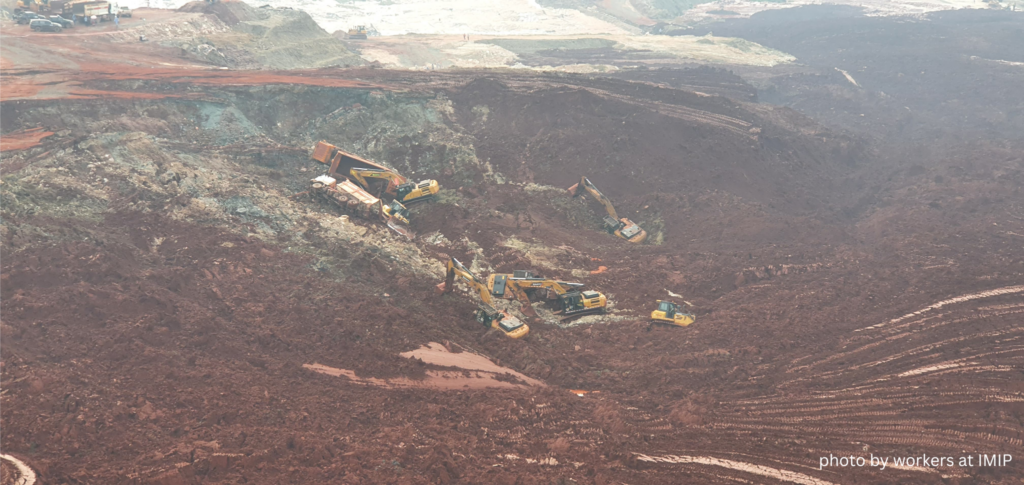
“These tailings facilities are a disaster by design. The risks created by the huge and growing amount of toxic waste are borne by workers, local communities, and the environment. Since 2015, over 40 workers have died due to unsafe working conditions at one industrial nickel park alone.” – Richard Labiro, Director of Yayasan Tanah Merdeka
Skyrocketing nickel production leads to more toxic waste
Over the past decade, Indonesian nickel production has skyrocketed. In 2015, annual production was 130,000 tons. In 2024, it was 2,310,000 tons—making the country responsible for more than 60 percent of global production.
Most of Indonesia’s increased nickel production comes from high-pressure acid leaching (HPAL) facilities. HPAL uses high pressure, extreme heat, and sulphuric acid to extract the metal. For every ton of nickel, HPAL processing makes 133 tons of waste, also called tailings. The sulfuric acid from HPAL makes the tailings highly corrosive, toxic, and difficult to manage.
Alternate disposal methods also cause harm
Some methods of tailings disposal, including building large dams to hold waste or cutting down huge amounts of forest to spread the waste more thinly, would have significant negative impacts on communities and the environment. Some Indonesian mines dump waste into the ocean or a river, which also has severe consequences for people and aquatic environments. The government committed to no longer issue new permits for ocean dumping.
Rains and earthquakes increase the risk
The waste from mining and processing have to go somewhere, and nickel processing companies turned to filtered tailings, a method in which some of the water is taken out. This can be a safer method of storing mine waste, but in countries like Indonesia that experience heavy rains and earthquakes, it presents significant risks.
Last month, one worker died and production halted temporarily after a filtered tailings storage facility collapsed at Indonesia Morowali Industrial Park. In March 2025, a tailings facility failed after heavy rains at the same industrial park, killing three mine workers. Satellite imagery and videos suggest there have been other, unreported failures at the industrial park.
Villagers and mineworkers need immediate protection measures
The report shows that other Indonesian tailings dams, particularly on Obi Island, are already dangerously tall, unstable, and overfilled. This puts them at risk of imminent collapse. In the event of a dam collapse on Obi Island, the tailings would most likely flow into a nearby river and from there to the Molucca Sea, threatening the safety of mineworkers and residents of the coastal village of Kawasi. The report also finds evidence that seepage from an Obi Island tailings facility contaminated groundwater with boron, chromium-6, and nickel.
“In Kawasi Village, nickel mining and processing have contaminated clean drinking water, and sediment pond failure has flooded the village. Instead of the company stopping activities or at least being forced to improve by the government, the residents’ village is being forcibly removed to a so-called “Eco Village” provided by the company.” – Astuti N. Kilwouw, executive director of WALHI North Maluku
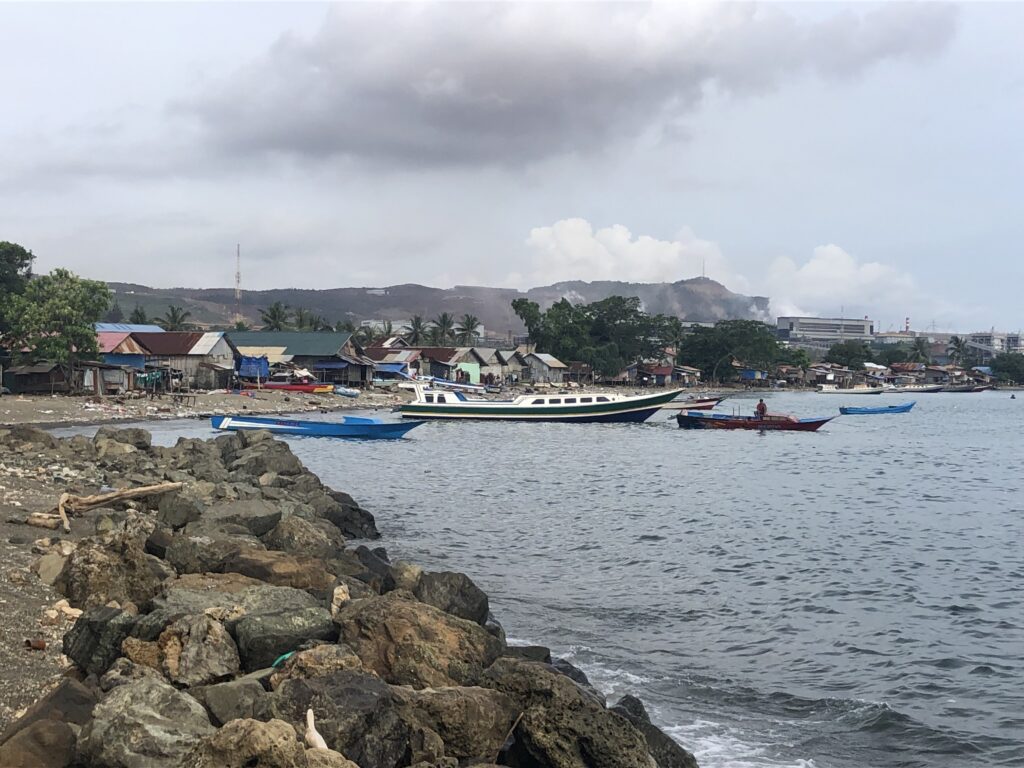
“The communities in Kawasi Village and Soligi Village have to suffer the impact of flooding, river pollution, a clean water crisis due to contaminated drinking water sources, and the impact of air pollution. The failure of the mine waste treatment facility will threaten communities in the two villages.” – Faizal Walhimalut, WALHI National campaigner
Immediate measures must be taken to protect those downstream of the Obi Island filtered tailings facility. And our report shows the safety risk is present at other sites as well. A facility at the Indonesia Weda Bay Industrial Park is also operating under dangerous conditions that far exceed what has been built anywhere else in the world, and the deaths at Indonesia Morowali Industrial Park demonstrate the need for urgent action.
Report calls for a moratorium until dangers are addressed
We’re calling for a moratorium on adding more tailings to existing filtered tailings facilities and on permits for new facilities until the Indonesian government establishes improved safety guidelines. These guidelines should meet the standard set by Safety First: Guidelines for Responsible Mine Tailings Management, a framework for tailings dams approved by 164 NGOs, technical experts, and Indigenous frontline communities.
“People on Sorowako, including women, farmers, and fishers, have been speaking up about the harm that mining causes them, their communities, and their land and water. It is time for local and national governments, companies and investors to take these concerns seriously and put in place safeguards for people and the environment.” – Muhammad Al Amien, executive director of WALHI South Sulawesi
Independent safety inspections should be carried out at all tailings facilities in order to re-open. No new waste should go into these facilities until they’ve been deemed safe by a credible independent expert accountable to the Indonesian government.
Companies should actively engage all communities and workers who are at risk to co-design emergency management and response plans that keep people safe while also respecting residents’ rights to choose to stay in their homes and on their land.
Action now could save lives and build a more just and sustainable future
The minerals needed to power the transition to cleaner energy must be sourced in safe, sustainable ways that safeguard people’s lives and rights and protect the environment. Workers and communities in Indonesia should not be forced to sacrifice their lives, safety, and rights to supply minerals to the world. A just and stable transition to cleaner energy requires governments, mining companies, buyers, and investors to address the serious risks and harms associated with this growing industry.
The company and the government must be held accountable for their mining management policies that destroy the local ecological system by ignoring the voice and participation of the community! – Astuti N. Kilwouw, executive director of WALHI North Maluku
You can read the full report here. It is endorsed by WALHI Southeast Sulawesi, WALHI South Sulawesi, WALHI North Maluku, Yayasan Tanah Merdeka (YTM), PUSPAHAM, Satya Bumi, and Aksi Ekologi & Emansipasi Rakyat (AEER).