
|
Getting your Trinity Audio player ready...
|
The Thacker Pass mine demonstrates that the flawed permitting process for mining projects in the United States cuts Indigenous Peoples and local communities out of decision-making, invests taxpayer dollars in projects that hurt communities and the environment, and repeats the harms of the past, especially harms to Indigenous Peoples.
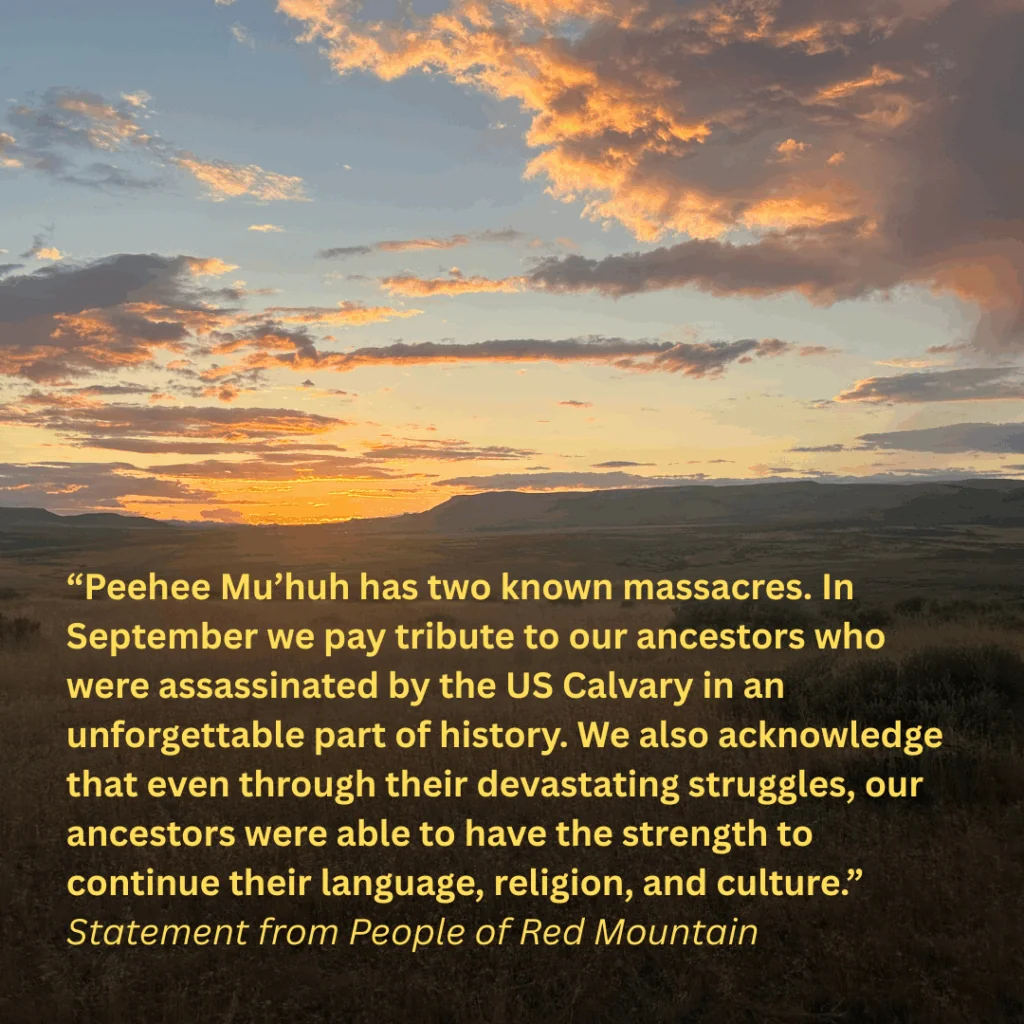
On Sept 12th, People of Red Mountain, a committee of traditional knowledge keepers and descendants of the Fort McDermitt Paiute, Shoshone and Bannock Tribes, hosted the fifth annual commemoration of the 1865 Massacre at Peehee Mu’huh in what is now called Nevada. This landscape is sacred to the Paiute, Shoshone, and Bannock peoples. The slaughter of local Indigenous Peoples by the US Cavalry at Peehee Mu’huh in 1865 is a moment in history that is familiar to the descendants living in the area today. In the last few years, this area has faced a new wave of colonial harms.
A Controversial and Flawed Permitting Process
In January of 2021, the Bureau of Land Management released a Record of Decision approving the Thacker Pass lithium mine on the same landscape as the 1865 massacre. The decision is part of a push to provide minerals from within the United States for electric vehicle batteries, weapons and other military technology, and data centers, among other uses.
The Bureau of Land Management approved it in a highly controversial permitting process. The project faced lawsuits from a local rancher, environmental NGO’s, and local Tribes. In question were impacts to the area’s water resources, inadequate analysis of mining claims, and inadequate consultation with the area’s Indigenous Peoples. The courts conceded that the BLM violated the law regarding the analysis of mining claims, but they did not rescind the mine’s permit. This followed the precedent set from an earlier case, called the Rosemont Decision.
Taxpayer Investment in Loans and Equity Stakes
The Thacker Pass lithium mine was pushed through under Donald Trump’s first term and given a 2.3 billion dollar loan from the Department of Energy under the Biden Administration. The loan was granted while litigation was still in process. This month, the Trump administration bought a 5% equity stake in Lithium Americas, the company that is developing the mine, and 5% stake in the mine itself, jointly owned by General Motors.
The U.S. government has supported the Thacker Pass mine at every turn, demonstrating a disconnect between policymakers in Washington DC and rural and Indigenous communities. This mine will desecrate sacred land, and communities, like the ones in McDermitt and Orovada, will pay the price.
The BLM’s Environmental Impact Statement shows impacts to water resources, cultural resources, and public safety, among many other things. For example, at phase two of the project (year five to year 41), a one-lane highway will see an additional 120 to 200 truck trips per day. The Mining and Exploration Plans intersect 923 archaeological and architectural resources. Of these, 56 are eligible for listing on the National Register of Historic Places. The project will pump 3,230 gallons of water per minute for 36 years, more than the average American uses in a month.
An Outsized Impact
Pushing through projects needed for lithium and other so-called “critical minerals” has a particularly big impact on Indigenous Peoples. A study in the journal Nature showed that more than half of the mining projects for these minerals globally are on or near Indigenous Peoples’ lands. In the United States, the overwhelming majority of mining properties are within 35 miles of Native American reservations. Indigenous Peoples have also experienced disproportionate harm from mining projects, including an increased risk of Missing and Murdered Indigenous Women associated with large workforces at extraction sites.
The Benefits of Tribal and Public Input
If communities are going to bear the burdens of these projects, then the siting of a mine should be done with due diligence and extreme thoughtfulness. Once a mine comes into an area, the community and the environment will forever be changed. The rush for lithium is driving the rollback of systems designed to keep communities safe from harmful practices.
Government leaders continue to attack bedrock environmental regulations, cutting Tribal and public participation from the permitting process. This can actually delay mine permitting, as projects without early consultation and without communities and Tribes at the table are more likely to face conflict and litigation to address problems in the initial process. While it remains to be seen how this all plays out, one thing is certain: local people whose rights were violated and whose voices were excluded from the decision-making process, will be the ones living with the consequences. Seeing the repeated harms at Peehee Mu’huh shows how decision-makers must maximize public protections and minimize the need for new minerals.