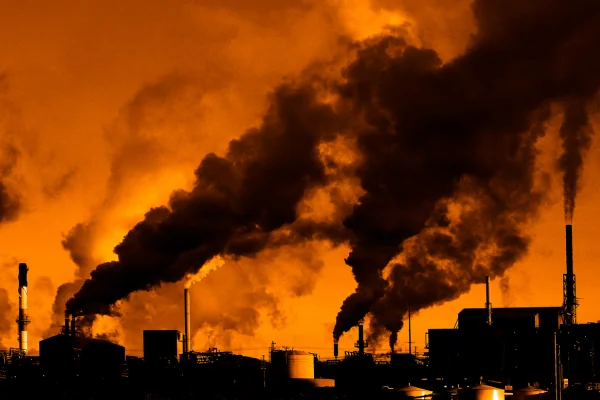
Through an infrared camera, Earthworks reveals hidden pollution from the hydrocarbon industry in Argentina.
Buenos Aires, Argentina – Between May 15 and May 21, 2026, a delegation comprising the Environment and Natural Resources Foundation (FARN), the Argentine Association of Environmental Lawyers (AAdeAA), and the U.S.-based organization Earthworks toured key hydrocarbon extraction and processing sites in Argentina: Bahía Blanca and areas of the Vaca Muerta formation. This latest OGI survey made it clear that the devastation and pollution already affecting Vaca Muerta are easily perceived—through smell, sight, physical sensation, and sound.
The report presents the results of the most recent survey covering the Vaca Muerta formation (in Neuquén province), Bahía Blanca (Buenos Aires province), and the Gulf of San Matías (Río Negro)—areas where infrastructure for oil and LNG export is currently being installed. This report follows up on a similar survey conducted in 2023.
This time, we were able to observe the consequences of extracting ever-increasing amounts of resources from territories that are already vulnerable: aging yet expanded infrastructure in Bahía Blanca, and a new network of oil and gas facilities linked by a vast web of pipelines crossing the country.
“The destruction and devastation entailed by all this are tangible, and the affected communities continue to speak out and demand change,” says Patricia Rodriguez, an optical gas imaging specialist at Earthworks. “Local groups are concerned about the impact on residents’ livelihoods and the socio-environmental consequences of these advancing projects. For instance, in the Gulf of San Matías, LNG operations will affect protected species such as the southern right whale, orcas, and the Magellanic penguin.”
One of the most striking images of air pollution captured during the field survey shows the El Chañar gathering and separation facility, operated by Pan American Energy in the Lindero Atravesado Occidental shale block. The company is currently the second-largest oil producer in Vaca Muerta. Our survey revealed that the storage tank generates significant pollution—emissions that were even detected in satellite imagery in October 2025.
It is also noteworthy that among the sites with the highest methane emissions are three companies operating in Bahía Blanca (TGS, Mega, and Pampa Energía) that have either been approved for, or are currently being evaluated for, national government tax incentives under the 30-year Incentive Regime for Large Investments.
The images showing emissions of methane and volatile organic compounds were captured using a thermal imaging camera—a technology approved by the U.S. Environmental Protection Agency (EPA)—capable of making visible what the human eye cannot detect: toxic gases escaping from wells, processing plants, and pipelines.
Earthworks is an organization with an extensive track record in detecting unreported leaks within the oil industry, having received coverage in outlets such as The Wall Street Journal and The New York Times. In 2023, the group made its third visit to Argentina, surveying 36 sites and concluding that the hydrocarbon sector’s expansion policies increase the risk of adverse health effects on communities and exacerbate the climate crisis.
This survey, spearheaded by Earthworks, contributes visual and technical documentation to a debate Argentina can no longer postpone: the true health and climate costs of hydrocarbon expansion.
Patricia Rodriguez explains the significance of this work: “The hope for rural and coastal towns and cities lies with the communities and Indigenous peoples themselves, who are turning this evidence—and their own stories—into a tool to demand full participation in decisions affecting their lives and territories. The truth matters.”
For more information: