
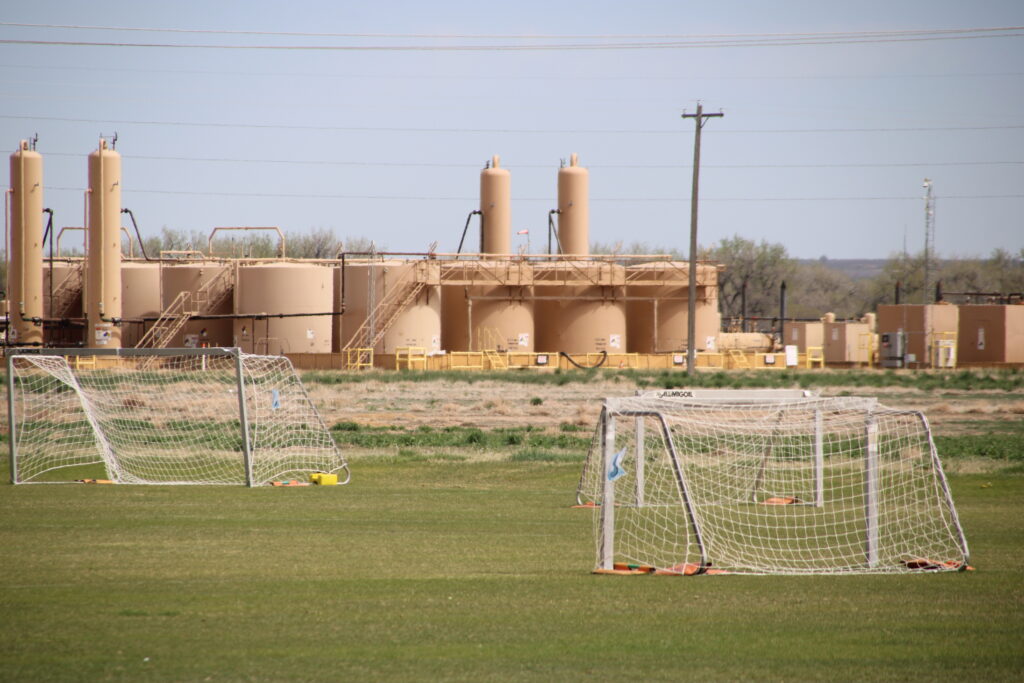
Oil and methane gas is different.
In February, the Trump administration announced an unprecedented attack to sabotage the Environmental Protection Agency’s ability to do its job. At the center of that effort is the science-based “Endangerment Finding”, which found greenhouse gases “may be reasonably anticipated to endanger public health or welfare.” This finding resulted in the regulation of greenhouse gases from cars and other vehicles under the part of the Clean Air Act that addresses mobile sources. It also preceded similar, but separate, scientific findings and legal determinations under other sections of the Clean Air Act that stationary sources are covered under. Voiding the Endangerment Finding is one of the greatest attacks on the ability of the federal government to tackle the climate crisis to date.
But national rules to cut methane pollution from the oil and gas industry remain intact. The administration’s assault on the Endangerment Finding does not, in and of itself, jeopardize these rules.
Here’s why and what comes next.
The first reason is a simple yet slightly technical one.
The Trump administration has primarily focused on undermining rules that cut pollution from cars. The EPA’s power to regulate car pollution comes from a specific section of the Clean Air Act (section 202). It was for this section alone that the 2009 Endangerment finding was made. It is this section alone that the Trump administration’s action attacks.
Methane and other ‘stationary sources’ of pollution, such as factories, refineries, and power plants are regulated under a different section of the Clean Air Act – section 111.
The second reason is a big one!
Another key argument made by the Trump administration to attack the Endangerment Finding is that Congress never explicitly passed a law ordering the EPA to regulate climate pollution. It is a bold argument from an administration that ignores Congress on everything else, including the decision to go to war. It is also an argument that has been lost in court before, as the seminal case Massachusetts v. EPA held that the Clean Air Act is “unambiguous” that greenhouses gases are “air pollutants” under that law But, both of those points aside, Congress has explicitly recognized EPA’s authority to cut methane emissions in the way that it has. And, Congress did so on two occasions: once in 2021 through a Congressional Review Act resolution disapproving of a 2020 attempt to deregulate methane and again through the 2022 Inflation Reduction Act via the Methane Emissions Reduction Program, and amendment to the Clean Air Act.
This is fantastic news at a time in desperate need of some.
Methane is an incredibly dangerous climate change accelerant. In the short-term (~20 years), it is 80x more powerful at warming the planet than CO2, and responsible for a third of the warming that has already happened. It leaks at every step of the supply chain – from the hole drilled in the oil and gas fields to the stove top in your kitchen. When it leaks, it is often released with other pollutants, including cancer-causing toxics.
Now is still the time to act.
Let’s be clear – revoking any part of the ‘Endangerment Finding’ or EPA’s authority to regulate greenhouse gases from any sector is awful and harmful, no doubt. Even if the attack is ultimately defeated in courts or Congress, the delay or suspension of rules to cut pollution hurts families and sets the U.S. on a reverse course on climate than the rest of the world. Lee Zeldin, the EPA Administrator, and Donald Trump continue to play politics with public health and the nation’s economy for the sake of ideology, and to the boon of profits to some donors and supporters. We must fight back against these attacks to ensure clean air and healthy, vibrant communities.
But for now, national methane rules are still on the books, and oil and gas states like New Mexico, Pennsylvania, and Colorado must keep working to build strong methane controls, including using new technologies like methane satellites to detect and reduce even more pollution.
Activists, communities, scientists, and policymakers fought for years to cut methane gas and slow the climate crisis. Now is the time to keep up demands that our elected officials do their part.
Interested in getting involved at the local level? Sign up for our newsletter to get the latest news about our work and opportunities to engage.