
|
Getting your Trinity Audio player ready...
|
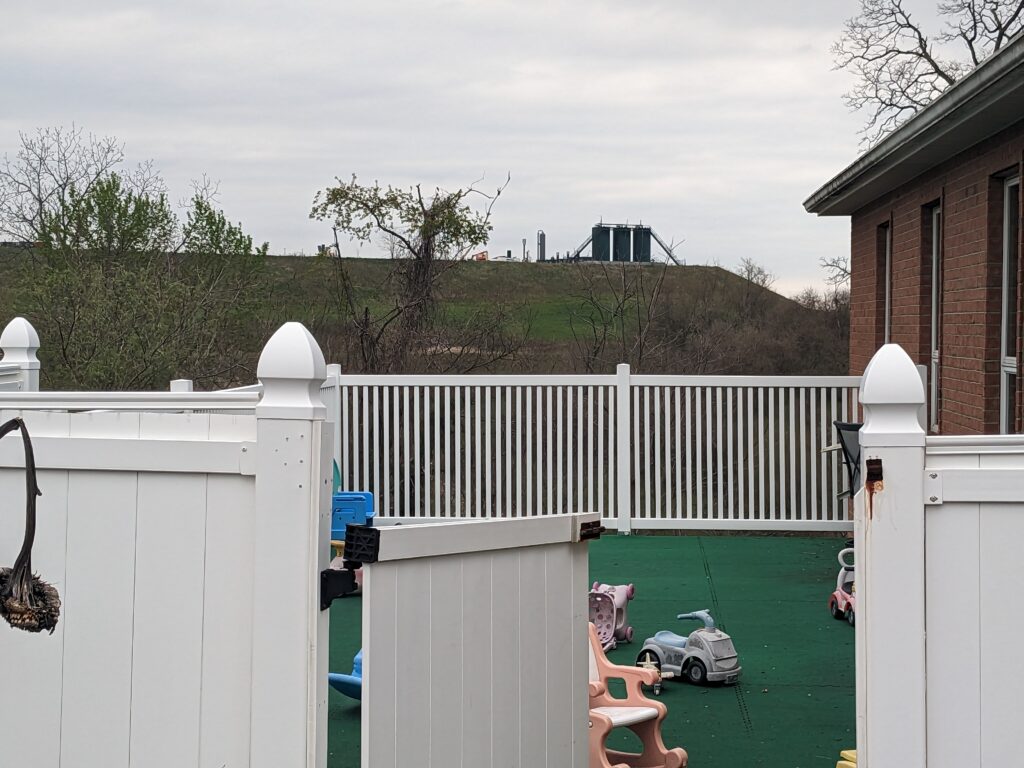
Have you ever read the children’s story, If You Give a Mouse a Cookie? It’s a tale that shows how one event can lead to another before escalating into an uncontrollable chain of events – all starting with a single cookie.
Unfortunately, this principle doesn’t just apply to mice, cookies, and milk. It’s also at work when governments allow polluting infrastructure into communities. And, it’s one of the many reasons Earthworks opposes the permitting of well pads close to homes, schools, and other vulnerable locations.
Each new piece of equipment on the pad lowers air quality and can worsen health.
Last month, Earthworks submitted comments to the Allegheny County Board of Health in Pennsylvania. The comments opposed an air quality permit for adding yet another piece of equipment to a fracked well pad that is already polluting backyards in West Deer Township. The well pad, called Leto, is located just 650 feet from homes – a few minutes walk from families’ front porches.
The Leto pad already included polluting equipment when initially approved. Now, Leto’s operator, EQT, is asking the county to approve the addition of a new piece of equipment on the pad: a tri-ethylene glycol dehydration unit.
While the name is complex, the concept is simple: a dehydration unit has the potential to add tons of additional pollution into the air of the surrounding community. Nearly 70 tons, to be exact.
This includes about 40 tons of volatile organic compounds (VOCs), more than 18 tons of carbon monoxide, around 8 tons of nitrogen oxides, almost 4 tons of hazardous air pollutants, and just over 1 ton of particulate matter. Breathing in this toxic pollution can increase cancer, heart disease, respiratory illness, birth defects, and other serious health impacts.
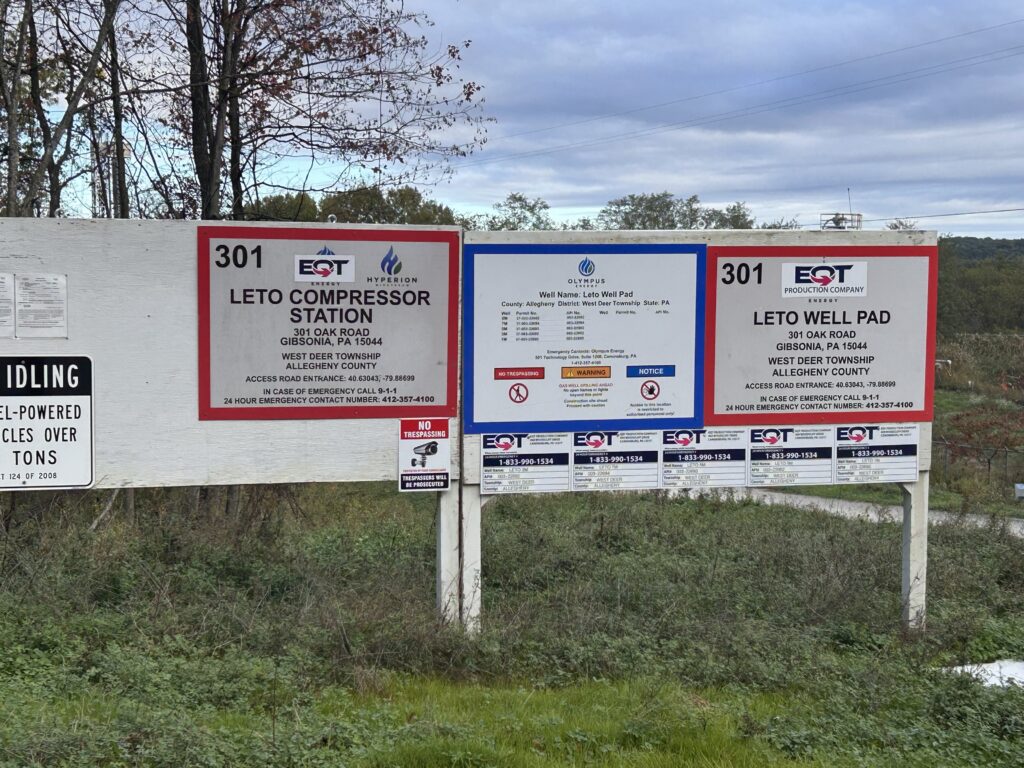
Neighbors in West Deer have been breathing in pollution from the Leto well pad since drilling began last year. They have already been exposed to noxious fumes from an unreported chemical spill in the fall. And the impacts add up – each new piece of equipment on the pad lowers air quality and can worsen health. And other wells built nearby have a combined effect.
Unfortunately, Pennslylvania treats polluting infrastructure in isolation.
PennEnviroScreen data shows that the Leto well pad is located in a community that is already in the 90th percentile for cancer diagnoses and the 78th percentile for heart disease diagnoses in the state of Pennsylvania. It is also home to a large population of seniors, at the 98th percentile for residents age 65 and older. This is a vulnerable population that is already breathing in toxic air emissions (72nd percentile), but the combined effects of air pollution are not considered in Pennsylvania’s laws.
That’s why Earthworks has been fighting for years to increase setback distances, or “protective buffers” – the minimum distance required between well pads, compressor stations, and other equipment, and homes, schools, hospitals, and other vulnerable locations. It’s why we support policies that take into account cumulative impacts, or the combined effects of pollution from the total of all facilities that lower air quality in a community.
Other states, like Colorado, have adopted a 2,000 foot setback distance; and just a few weeks ago, regulators there acknowledged that this distance may not even be enough. In Pennsylvania, the minimum setback distance is just 500 feet – the length of a football field. And even that distance can be easily waived – meaning wells are built even closer to homes.
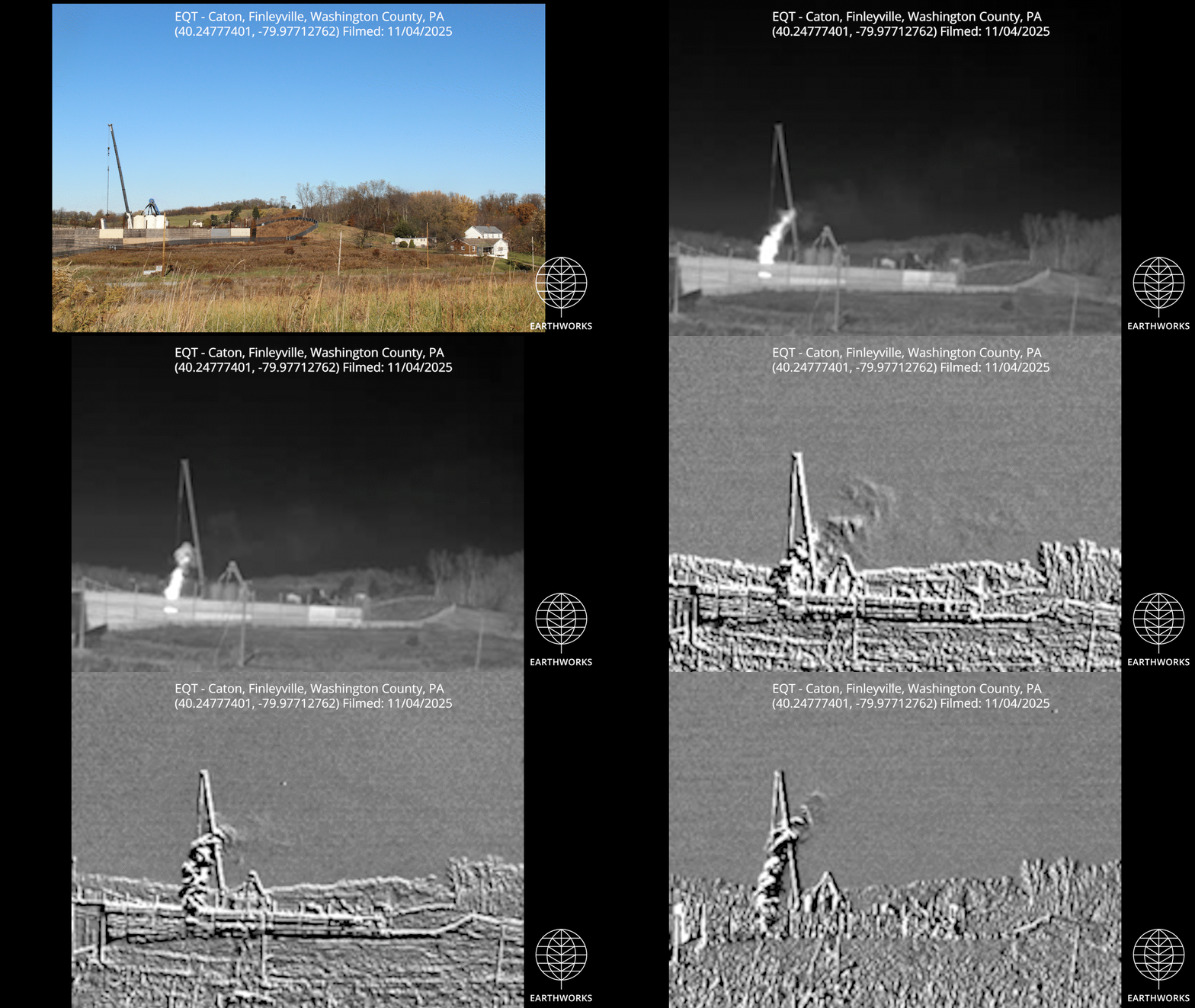
As part of Protective Buffers PA, we are pushing for a 1km distance between fracked well pads and homes, and greater distances for schools, hospitals, and other vulnerable locations.
Back in December, Pennsylvania’s Environmental Quality Board voted for our coalition’s petition to advance to the next stage in Pennsylvania’s regulatory process, requiring the Department of Environmental Protection to produce a report studying the petition. Thousands of Pennsylvania residents have signed petitions and sent postcards to the Shapiro administration asking the Governor to take action to increase setbacks based on his own 2020 Grand Jury Report recommendations. Understandably, many residents feel they have waited long enough.
Tired of waiting, some townships are taking action on their own.
Communities like Cecil Township in Washington County are standing up and creating their own rules, enacting a 2500-foot setback ordinance to protect their residents. Others, like West Deer in Allegheny County, are pushing back – well pad by well pad and dehydrator by dehydrator – until setback distances are increased. And Earthworks is standing with them.
Because we’ve seen how the industry works. First, it’s one well pad; then, a request for more polluting equipment; then another pad, and another, and more permits for more equipment. Without guardrails, an entire community can be overrun with polluting oil and gas infrastructure.
So we’ll keep submitting comments, permit by permit, and keep pushing for policy change at the township and state level. Because we know that if you give a polluter a well pad, they’ll want more. And we think communities like West Deer have already experienced enough.