
|
Getting your Trinity Audio player ready...
|
Updates to the Global Methane Tracker 2026 confirm what Earthworks has been saying for more than a decade – the oil and gas methane problem is worse than companies are willing to admit.
Despite Big Oil’s rhetoric about efforts to reduce methane emissions, the world is still far off track to stave off the worst effects of the climate crisis. Industry’s words may have changed (from climate denial to promises that industry is the solution), but our work in the oil and gas field still shows that actions haven’t. Or as the IEA, more neutrally, puts it: “transparency and reporting on abatement plans still lag the industry’s stated ambitions.”
Here are some big takeaways from the 2026 IEA Global Methane Tracker:
Estimates are estimates…which involve little to no actual measurement
For over a decade, Earthworks thermographers have been documenting pollution throughout the upstream and midstream sector at an alarming rate – often this pollution is going unreported until we discover it. Over the years, it has become clear to us that pollution estimates are just that… estimates, with little to no actual measurements. We are happy to see that the IEA has developed new methodologies that incorporate actual measurements to supplement and reconcile company-reported estimates and claims.
Detection has improved, yet industry still refuses to act
The IEA Global Methane Tracker also points to another major issue we have been sounding the alarm on for years – even when problems are identified, companies rarely take action.
The IEA (using data from the Methane Alert and Response System (MARS)) examined satellite-based methane emissions detections and alerts at both the global and country levels and found that, globally, only 12% of methane detection alerts were responded to in 2025. In the United States, the issue is far worse. According to the Global Methane Tracker, “Since 2022, the Methane Alert and Response System (MARS) has tracked 1,300 super-emitting oil and gas-related events in the United States – about 10% of the global total.” – that makes the United States one of the super-emitting countries. However, according to a 2025 report by the UNEP (the administrators of the MARS system) the United States has one of the lowest response rates at an abysmal 2%.
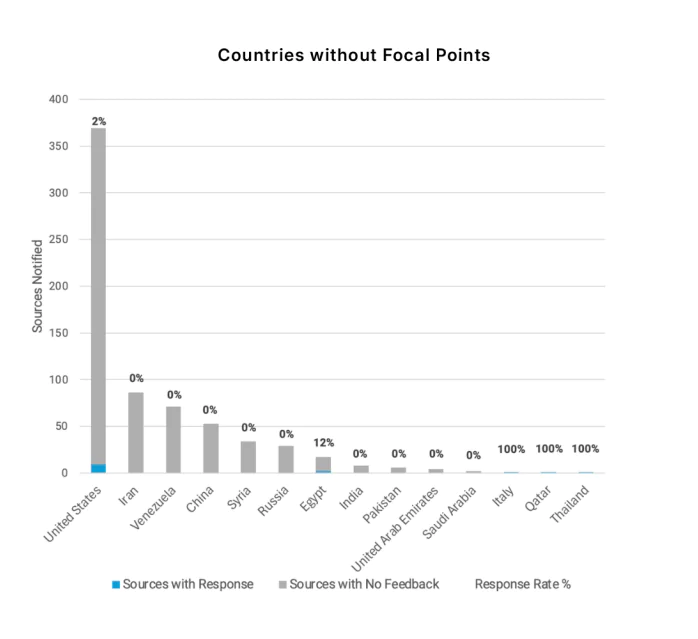
In other words, US oil and gas companies are massive methane polluters. They claim to have the tools to stop the pollution (just read the methane reductions section of any oil and gas company’s annual climate report – here is TotalEnergies, for example). They just don’t seem to take action to actually stop the pollution. What is most puzzling is that the IEA also finds that “around 30% of methane emissions from fossil fuel operations could be reduced at no cost.”
Integrity & Transparency Concerns on Gas Certification Schemes
Furthermore, “actions” that the industry has taken are shrouded in questions. For instance, gas certification efforts from companies like Project Canary, which claim to certify companies’ methane emissions, often don’t hold up under independent scrutiny. Through our field work, we even discovered that some of these efforts are little more than greenwashing. The IEA report references our effort (with OCI and the GasLeaks Project) to encourage Senator Markey (D-MA), a member of the Senate Committee on Consumer Protection, Technology, and Data Privacy (which oversees the FTC) to address certification schemes within the FTC.
Although certification typically involves independent third-party verification of emissions (enhancing buyers’ trust in reported emissions), it also faces its own unique challenges. Measurement-based quantification is not always required, raising the risk that methane emissions could be underestimated. Although volumes of certified natural gas reached 320 bcm in 2024 (roughly 7.5% of global output), certification remains concentrated in the North American upstream natural gas sector, with limited uptake elsewhere. Questions have also been raised about the integrity and transparency of some schemes, casting doubt on the reliability of emissions reported under them.
Raising the Bar: Data to Action at Earthworks
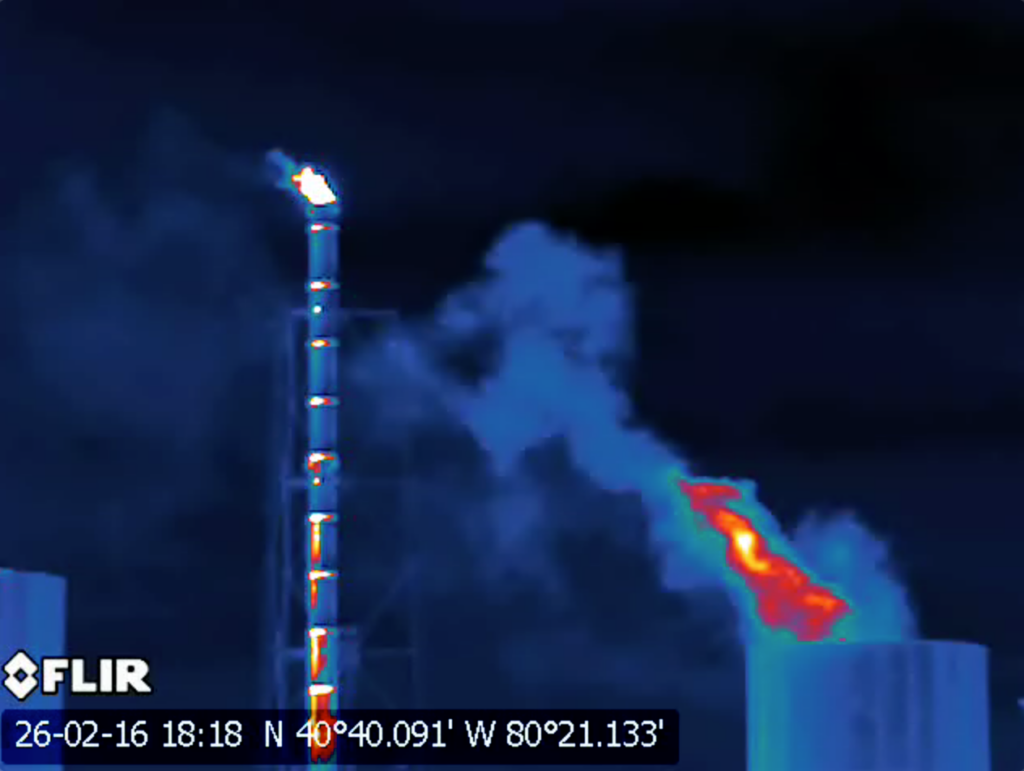
Methane detection tools are expanding and improving. Data is becoming more available, often at no cost. Earthworks is expanding its use of satellite technology to guide and strengthen our existing ground-truthing of oil & gas pollution harms using our optical gas imaging cameras. Yet, as the IEA report shows, what was true of industry and pollution before remains true today: without proper accountability, polluters will continue to pollute.
This is especially true now with the U.S. Trump Administration’s pay-to-play EPA, which stopped enforcing oil-and-gas methane regulations on March 12, 2025, and recently reaffirmed its intention to roll back methane standards for new and existing sources, as outlined in the 2024 EPA Methane Rule. That rule is one of the best levers that everyday people across the country currently have to hold fossil fuel companies accountable for methane pollution.
We believe the narrative must change to reflect the objective truth about polluters. The obvious discrepancy between industry rhetoric and data must translate into public skepticism of every oil & gas climate claim. The facts must translate into known truth so that the well-earned pressure from the public demands that the industry actually take action to stop polluting the air we breathe and the climate we depend on.
We believe accountability must be universal and enforced by government policies that put people before polluters.
We believe this industry must be phased out. Detection and significant reductions in methane pollution are essential, but only as a band-aid fix. Cuts to pollution facility-by-facility only buy us time to enact other energy solutions to the climate crisis. But not even those work if the number of facilities continues to expand and total methane emissions increase.
Earthworks Data 2 Action To Date
- Polluter of the Month series with partner Gas Leaks to shine a light on the biggest inconsistencies between the words and actions of the biggest polluters in the US.
- Report on Appalachian Super-emitters found nearly 100 oil and gas emission events in the Appalachian Basin, unknowingly exposing nearby communities to harmful carcinogens.
- Our work has always been covered in a Financial Times article that identified as repeat polluters several companies who advertise themselves as less polluting companies.
Earthworks Email List
Sign-up for more!
Thank You for Signing Up!