|
Getting your Trinity Audio player ready...
|
By anaïs Peterson
On a cold November afternoon in Cleveland, Ohio, Bessie (a mythical creature of Lake Erie folklore), reemerged. However, when she reached the shore, we could see that her scales had turned to plastic and her body was now made of plastic shoes, toys, and single-use items that pollute the Cuyahoga River.
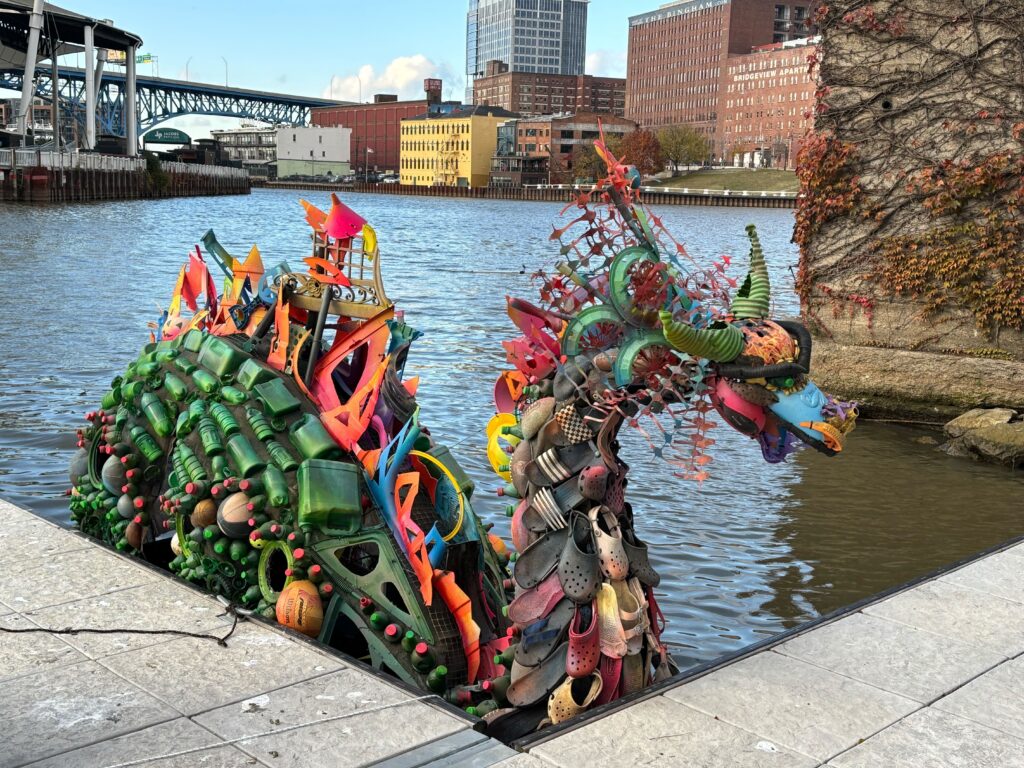
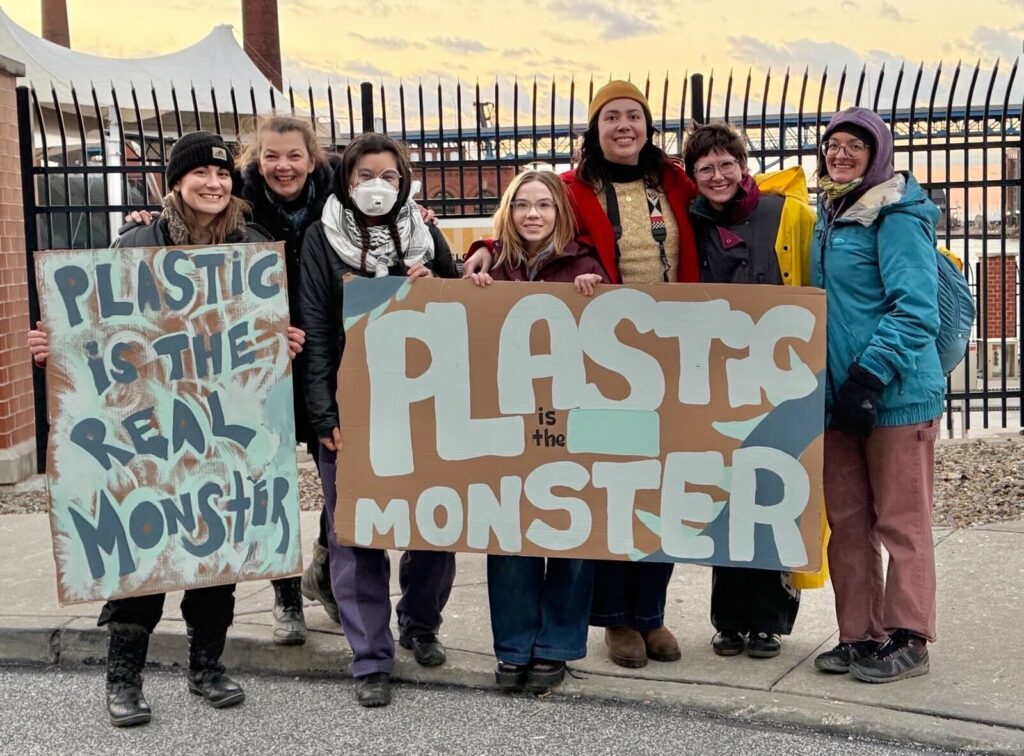
Bessie’s transformation was a creative action taken by the People Over Petro Coalition to remind the plastics industry that, while Bessie is mythical, plastic and plastic production are real monsters.
Frontline residents and partners gathered in Cleveland for the second year in a row to provide a counter-narrative to the AMI Plastic Recycling Expo held in the Huntington Convention Centre. This expo features a variety of different plastic companies, from petrochemical giants such as Dow to small mechanical recycling operations. While inside the convention center, the event agenda suggests that attendees mostly talk around the problem and give new names to old tech, ignoring that the real solution to the plastic crisis is to cut plastic production. These proposed “new solutions,” such as plastic pyrolysis, are just a fancy way of referring to plastic burning or incineration. This decades-old technology can release tons of toxic, cancer-causing chemicals in the air, water, and soil.
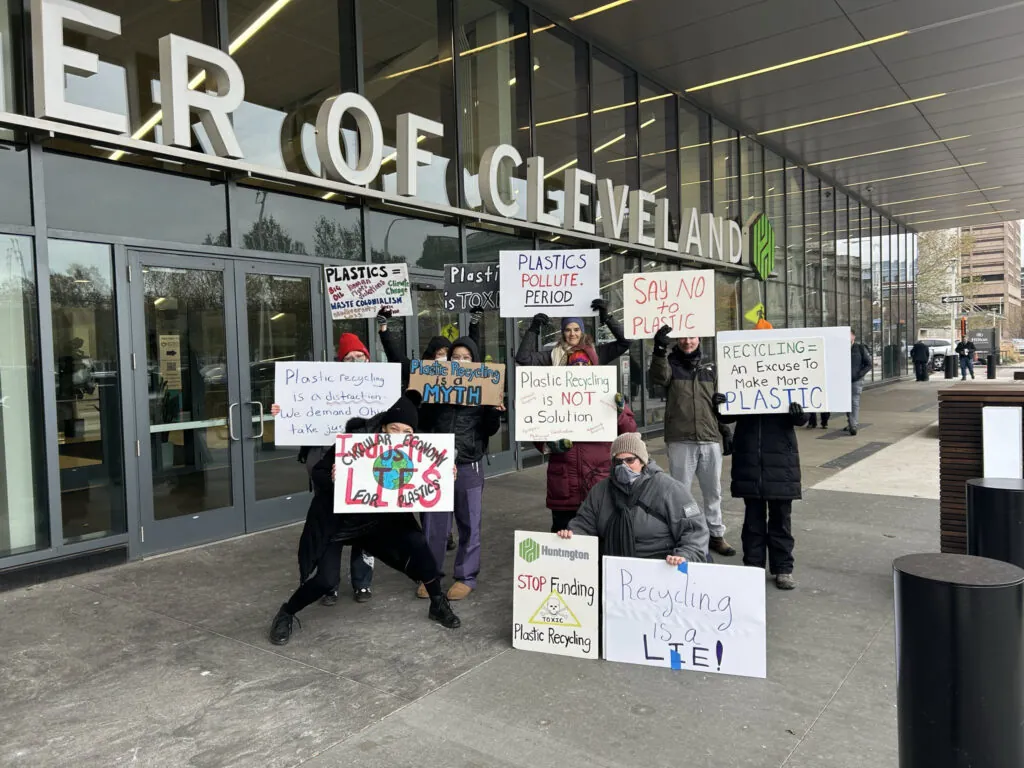
The morning of the expo’s first day, activists picketed outside the convention center, greeting attendees with signs and conversation. Most of the attendees rushed past, but a few stopped to engage in conversation. There was general agreement that current plastic waste management and recycling technologies pose issues. While these participants acknowledged that the majority of plastic does not get recycled, they continue to side-step the real human costs of the plastic industry.
The ideas and new technologies proposed in the abstracts by conference attendees are put into practice in our communities, where experimental technologies impact people, animals, and ecosystems for generations. There is no way to talk about the plastics crisis without addressing the people who have and will continue to be harmed by these false solutions.
Communities in Ohio already suffer from false recycling solutions. Akron, Ohio, is home to Alterra, one of the oldest plastic-burning facilities in the country. At the rally leading up to Bessie’s appearance, a local Akron organizer, Beth Vild, spoke to the crowd. Beth reminded us of the intentional decisions that led to the polluting of low-income and Black Akron neighborhoods: residents of row homes whose bodies are paying the price of living on the fencelines of the plastic-burning industry. East Akron has higher rates of asthma and heart disease than 90% of the country. Decades of environmental racism and redlining have forced people to live next to a facility with a history of excess emissions.

Image Credit: Akron Beacon Journal
While Akron is home to a current plastic-burning facility, the industry is looking at the Ohio River Valley for a host of new facilities across Ohio and West Virginia. We are at a crucial moment. We must take action to prevent these false solutions from becoming another money-making scheme used to exploit our community’s health and well-being for the plastic industries’ profit.